Introduction
Trailer wiring and lighting are essential for every safe towing experience. Whether you’re hauling a utility trailer, boat trailer, travel trailer, horse trailer, or cargo trailer, a properly functioning wiring and lighting system ensures other drivers can clearly see your braking, turning, and driving intentions. Faulty trailer lights are among the most common reasons for roadside citations and preventable accidents.
In this comprehensive guide, you’ll learn how trailer wiring works, understand common connector types, identify wiring color codes, troubleshoot lighting issues, perform regular maintenance, and follow best practices that improve safety and reliability. Whether you’re a beginner or an experienced trailer owner, this guide will help you keep your trailer road-ready.
Why Trailer Wiring and Lighting Matter
Your trailer lighting system communicates your vehicle’s movements to everyone around you. Every light has a specific purpose:
- Brake lights indicate stopping.
- Turn signals show direction changes.
- Tail lights improve visibility at night.
- Side marker lights increase trailer visibility.
- Reverse lights help during backing.
- Electric brake wiring improves stopping performance.
- Auxiliary power supports trailer accessories.
When even one light fails, the risk of accidents increases significantly.
Main Components of a Trailer Wiring System
A complete trailer electrical system includes several components working together.
1. Vehicle Connector
The connector transfers electrical signals from the tow vehicle to the trailer.
Common connector styles include:
| Connector | Uses |
|---|---|
| 4-Pin Flat | Small utility trailers |
| 5-Pin Flat | Boat trailers with surge brakes |
| 6-Pin Round | Medium-duty trailers |
| 7-Way RV Blade | Travel trailers, campers, equipment trailers |
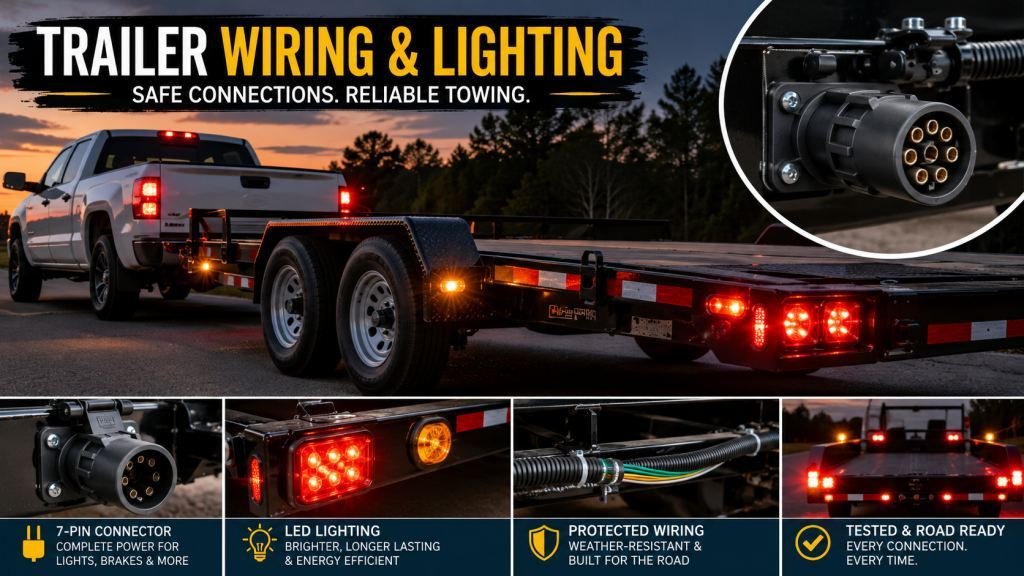
The 7-way connector is today’s most versatile option because it supports electric brakes, reverse lights, and auxiliary charging.
2. Trailer Wiring Harness
The wiring harness distributes power throughout the trailer.
Quality harnesses include:
- Weather-resistant insulation
- Copper wiring
- Protective loom
- Flexible jacket
- Corrosion-resistant terminals
Avoid low-quality wiring because vibration eventually causes internal wire failures.
3. Trailer Lights
Typical trailer lights include:
- LED tail lights
- Brake lights
- Turn signals
- Side marker lights
- Clearance lights
- License plate light
- Reverse lights
LED lighting has become the preferred choice because it lasts longer and consumes less power.
Understanding Trailer Wiring Color Codes
Although manufacturers occasionally vary, the following colors are commonly used.
| Wire Color | Function |
|---|---|
| White | Ground |
| Brown | Tail lights |
| Yellow | Left turn & brake |
| Green | Right turn & brake |
| Blue | Electric brakes |
| Black | 12V auxiliary power |
| Purple | Reverse lights |
Always verify wiring diagrams before making repairs.
4-Pin vs 7-Pin Trailer Connectors
Choosing the right connector depends on your trailer.
4-Pin Connector
Suitable for:
- Utility trailers
- Small cargo trailers
- Lawn equipment trailers
Supports:
- Tail lights
- Brake lights
- Turn signals
7-Pin Connector
Recommended for:
- RV trailers
- Horse trailers
- Equipment trailers
- Car haulers
Supports:
- Electric brakes
- Reverse lights
- Battery charging
- Auxiliary power
- Full lighting system
If you’re buying a new trailer today, a 7-way connector provides the greatest flexibility.
LED vs Incandescent Trailer Lights
Modern trailers increasingly use LED lights.
| LED Lighting | Incandescent Lighting |
|---|---|
| Long lifespan | Shorter lifespan |
| Low power draw | Higher power usage |
| Brighter illumination | Dimmer output |
| Better vibration resistance | More fragile |
| Faster response | Slower response |
Although LED lights cost more initially, they generally save money over time because they require fewer replacements.
Common Trailer Lighting Problems
Several issues appear repeatedly.
Corroded Connectors
Moisture causes corrosion inside plugs.
Symptoms include:
- Flickering lights
- Intermittent operation
- Complete light failure
Cleaning connectors regularly helps prevent these problems.
Bad Ground Connection
Poor grounding is the leading cause of trailer lighting failures.
Signs include:
- Multiple lights acting strangely
- Dim lights
- Brake lights affecting turn signals
- Random flickering
Always inspect the white ground wire first.
Broken Wiring
Road debris, vibration, and weather can damage wires.
Look for:
- Cracked insulation
- Pinched wiring
- Exposed copper
- Loose connectors
Protective wire loom significantly reduces damage.
Blown Fuses
Tow vehicles usually protect trailer circuits with dedicated fuses.
Check:
- Vehicle fuse box
- Trailer brake controller fuse
- Auxiliary power fuse
Always replace fuses with the correct amperage.
How to Troubleshoot Trailer Wiring
Follow this systematic approach.
Step 1
Inspect the connector.
Look for:
- Bent pins
- Corrosion
- Dirt
- Moisture
Step 2
Test vehicle output.
Use:
- Circuit tester
- Multimeter
- Trailer light tester
Confirm each pin supplies power correctly.
Step 3
Check the ground.
The ground should be securely attached to clean metal.
Step 4
Inspect every light.
Check:
- Bulbs
- LED modules
- Lens condition
- Wiring
Step 5
Trace damaged wiring.
Repair broken sections using:
- Waterproof butt connectors
- Heat-shrink tubing
- Marine-grade wire
Avoid twisting wires together without proper connectors.
Tips for Installing Trailer Wiring
A careful installation prevents future issues.
Best practices include:
- Use weatherproof connectors.
- Route wires away from moving parts.
- Protect wiring inside conduit.
- Secure wires with cable clamps.
- Leave enough slack for turning.
- Seal exposed connections.
- Test every circuit before driving.
Professional-quality installations typically last many years.
Maintenance Checklist
Routine maintenance reduces unexpected failures.
Before each trip:
- Check brake lights.
- Verify turn signals.
- Test tail lights.
- Inspect side markers.
- Examine connectors.
- Look for damaged wiring.
- Confirm electric brake operation.
- Clean plug terminals.
Monthly:
- Apply dielectric grease.
- Tighten grounds.
- Inspect wire insulation.
- Replace cracked lenses.
Annual inspections help catch small issues before they become expensive repairs.
Safety Tips for Trailer Wiring and Lighting
Always prioritize safety.
- Never tow with non-functioning lights.
- Replace damaged connectors immediately.
- Keep wiring away from hot exhaust components.
- Use waterproof electrical connections.
- Carry spare fuses.
- Carry replacement bulbs if using incandescent lights.
- Test lighting before every trip.
- Replace damaged wiring instead of patching repeatedly.
These simple habits improve both safety and reliability.
Frequently Asked Questions
Why are my trailer lights dim?
Dim lights usually indicate a poor ground, corroded connector, weak battery, or damaged wiring.
Can LED trailer lights replace incandescent lights?
Yes. Most trailers can be upgraded to LED lighting. Some vehicles may require load resistors or compatible modules, but many modern tow vehicles support LED lights without modification.
How often should trailer wiring be inspected?
Inspect the lighting system before every towing trip and perform a thorough wiring inspection at least once a year.
What causes trailer lights to flicker?
Common causes include loose plugs, corroded connectors, broken wires, poor grounding, or damaged sockets.
Can I repair damaged trailer wiring?
Minor damage can often be repaired using waterproof connectors and heat-shrink tubing. If the wiring harness has widespread corrosion, multiple breaks, or deteriorated insulation, replacing the entire harness is usually the most reliable solution.
Final Thoughts
A dependable trailer wiring and lighting system is one of the most important safety features on any trailer. From selecting the correct connector and understanding wire color codes to installing quality components and performing routine inspections, every step contributes to safer towing and fewer roadside problems.
Investing in durable wiring, corrosion-resistant connectors, and bright LED lights can reduce maintenance, improve visibility, and provide greater peace of mind on every journey. By following the maintenance and troubleshooting practices outlined in this guide, you’ll keep your trailer compliant, dependable, and ready for the road—whether you’re towing across town or across the country.