The 2026 Shift in Trailer Stability Standards
On July 31, 2026, the landscape of American towing safety underwent a significant transformation. The National Highway Traffic Safety Administration (NHTSA) released its final compliance roadmap for the 2026 Trailer Sway Control Standards, a move designed to drastically reduce high-speed highway accidents involving travel trailers and fifth wheels. For years, trailer sway—often called the ‘silent killer’ of the road—has been managed primarily through mechanical friction hitches. However, as trailer sizes increase and tow vehicles become more lightweight, the physics of towing has demanded a more sophisticated solution.

The new standards specifically target trailers with a Gross Vehicle Weight Rating (GVWR) exceeding 5,000 pounds. Starting in the fall of 2026, manufacturers will be required to integrate active electronic stability systems that interface directly with the trailer’s braking system. This article explores what these changes mean for you, how the technology works, and what steps you need to take to ensure your current or future rig remains safe and legal on US highways.
Table of Contents
Understanding the Physics of Trailer Sway
Before diving into the new regulations, it is essential to understand why sway happens. Trailer sway occurs when external forces—such as side winds, passing semi-trucks, or sudden steering inputs—cause the trailer to oscillate behind the tow vehicle. If the frequency of these oscillations matches the natural frequency of the towing setup, the sway can become self-amplifying, eventually leading to a jackknife or rollover.
Traditionally, towers relied on ‘friction sway control’ bars. These devices use physical resistance to slow down the movement of the hitch. While effective for minor gusts, they are reactive and often require the driver to manually adjust them based on road conditions. The NHTSA data from 2025 indicated that nearly 35% of towing accidents were exacerbated by improperly adjusted mechanical sway devices, prompting the push toward automated, electronic solutions.
Mechanical vs. Electronic Sway Control: The Critical Differences
The 2026 standards emphasize ‘active’ intervention. Unlike a friction bar that simply resists movement, electronic sway control systems use high-speed sensors to detect the onset of sway before the driver even feels it. These systems can then apply braking force to individual trailer wheels to ‘pull’ the trailer back into alignment.
| Feature | Mechanical Friction Sway Control | Electronic Stability Control (2026 Std) |
|---|---|---|
| Detection Method | None (Passive resistance) | Accelerometers and Gyroscopes |
| Response Type | Resistance to pivot | Individual wheel braking |
| Driver Input | Required (Manual adjustment) | Automatic (No driver action needed) |
| Wet Weather Use | Often restricted/decreased efficacy | Fully optimized for all conditions |
| 2026 Compliance | Secondary/Supplementary | Mandatory Primary for New Builds |
Key Requirements of the July 2026 NHTSA Update
The July 31 update clarifies several points that had been debated by the RV Industry Association (RVIA) and consumer safety groups. The core of the mandate focuses on three technical pillars:
- Independent Braking: The system must be capable of applying brakes to either side of the trailer independently to counter asymmetrical sway forces.
- Real-Time Monitoring: Systems must sample data at a rate of at least 50 times per second to ensure intervention happens within milliseconds of a sway event.
- Auto-Disengage: To prevent overheating or brake fade, the system must include logic that distinguishes between a temporary sway event and a continuous mechanical failure.
While the mandate primarily affects manufacturers of 2027 model-year trailers, it has immediate implications for the used market. Insurance providers have already begun signaling that ‘Premium Safety Discounts’ will be tied to the presence of these electronic systems, making retrofitting an attractive option for owners of older, larger trailers.
How Electronic Sway Control Systems Work
Most modern electronic systems, such as those developed by Lippert or Dexter, are mounted directly to the trailer’s chassis. They utilize a complex set of algorithms to monitor the relationship between the trailer’s lateral movement and its forward velocity. When the system detects a sway pattern that exceeds a pre-set safety threshold, it bypasses the tow vehicle’s brake controller to apply the trailer’s electric or hydraulic brakes.
This is a crucial distinction. In a traditional sway event, a panicked driver might slam on the tow vehicle’s brakes, which can actually worsen the sway by pushing the trailer forward into the truck. Electronic sway control does the opposite: it slows the trailer independently, effectively ‘stretching’ the towing combination and straightening the line of travel.
Interpreting the New Wiring Standards
With the 2026 standards, the 7-way trailer plug remains the standard interface, but the internal power management has changed. New trailers will feature dedicated ‘Safety Circuits’ that ensure the electronic sway control remains powered even if the auxiliary battery on the trailer is low. For a deeper look at how to maintain these connections, see our guide on Trailer Brake Troubleshooting.
Retrofitting Older Trailers for 2026 Compliance
If you own a trailer manufactured before 2026, you are not legally required to retrofit it under the current federal law. However, safety experts strongly recommend considering an aftermarket electronic sway control kit, especially if you tow a high-profile travel trailer in the ‘Windy West’ or through mountain passes.
The cost of retrofitting typically ranges from $400 to $800, plus labor. When compared to the cost of a potential total-loss accident, the investment is minimal. Additionally, as more Best Vehicles for Towing in 2026 come equipped with integrated trailer stability software in the truck itself, having a compatible system on the trailer side creates a dual-layer safety net.
Installation Checklist for Electronic Sway Systems
- Compatibility: Verify that the system is compatible with your trailer’s brake type (Electric vs. Hydraulic over Electric).
- Mounting Location: Most sensors must be mounted on the front cross-member of the trailer frame to accurately detect pivot speeds.
- Calibration: Modern systems often require a ‘self-calibration’ drive where the system learns the trailer’s center of gravity.
- Indicator Light: Ensure the status LED is visible in your rearview mirror or integrated into your in-cab display.
The Economic Impact: Insurance and Resale Value
The introduction of the Trailer Sway Control Systems 2026 Standards is expected to shift the resale market. Much like the transition from drum to disc brakes or the introduction of airbags in cars, trailers without electronic sway control will likely see faster depreciation. Buyers in 2026 and beyond are increasingly prioritizing safety tech over cosmetic upgrades like outdoor kitchens or luxury upholstery.
From an insurance perspective, major US carriers have indicated that trailers equipped with NHTSA-compliant electronic sway control may qualify for up to a 15% reduction in liability premiums. This is because the data shows a nearly 60% reduction in rollover incidents when these systems are active. If you are shopping for a trailer this year, checking for ‘ESC Factory Integration’ should be at the top of your inspection list.
Addressing Common Myths About Electronic Sway Control
As with any new mandate, several myths have circulated within the RV community. One common concern is that the system will ‘wear out’ the trailer brakes prematurely. In reality, electronic sway control only intervenes during emergency or near-emergency oscillations. Under normal driving conditions, the system remains in a passive monitoring state and does not apply the brakes.
Another myth is that electronic systems replace the need for a weight-distribution hitch. This is false. While electronic sway control manages lateral movement (sway), a weight-distribution hitch manages vertical load (tongue weight). Both are essential for a balanced and safe towing experience. The 2026 standards should be viewed as a supplement to, not a replacement for, proper hitching and weight management.
Conclusion: A Safer Road Ahead
The July 31, 2026, NHTSA update marks a turning point in the history of American trailering. By moving toward smarter, faster, and more reliable stability systems, the industry is making the road safer for everyone—not just those doing the towing. Whether you are purchasing a new 2027 model or looking to upgrade your current rig, understanding these new standards is the first step toward a worry-free camping season.
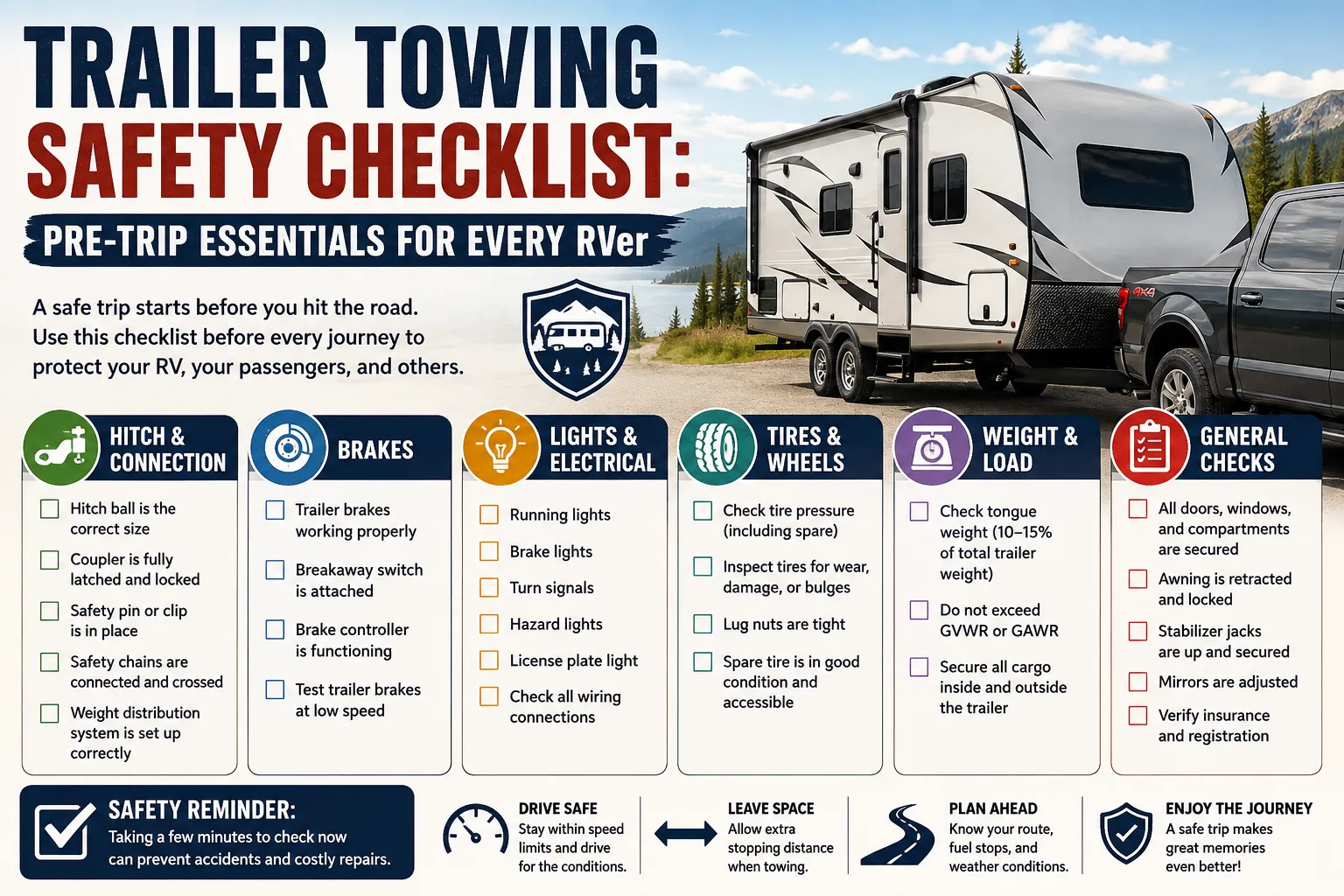
Safety is a continuous process. Beyond sway control, ensure you are regularly performing Trailer Tire Maintenance and checking your lights and connections before every trip. With the right technology and a commitment to maintenance, the great American road trip remains one of the safest and most rewarding ways to explore the country.
Frequently Asked Questions
Is electronic sway control mandatory for all trailers in 2026?
The new NHTSA standards mandate electronic stability systems for new trailers with a GVWR over 5,000 lbs manufactured after September 1, 2026. Older trailers are currently exempt but retrofitting is highly recommended.
Does electronic sway control replace a weight distribution hitch?
No. Electronic sway control manages side-to-side movement, while weight distribution hitches manage the vertical load on the tow vehicle’s axles. For maximum safety, both systems should be used together.
Will these new standards increase the price of travel trailers?
Yes, the addition of integrated sensors and independent braking logic is expected to add approximately $500 to $1,000 to the MSRP of new trailers, though this may be offset by insurance discounts.
Can I install an electronic sway control system myself?
Yes, many aftermarket kits are designed for DIY installation, but they require careful mounting of sensors and splicing into the trailer’s main brake wiring. Professional installation is recommended to ensure compliance with 2026 safety standards.