The 2026 Shift in RV Power Management
As we navigate the peak of the 2026 summer camping season, the way we power our trailers has fundamentally changed. The days of simply plugging into a 30-amp pedestal and forgetting about your batteries are gone. Modern travel trailers now utilize a complex ecosystem of solar arrays, smart converters, and high-density battery chemistries that require precise oversight. Following the August 14, 2026, advisory from the National RV Safety Council regarding smart-charger synchronization, understanding RV Battery Charging and Maintenance is no longer just a hobbyist skill—it is a critical safety requirement for every trailer owner.
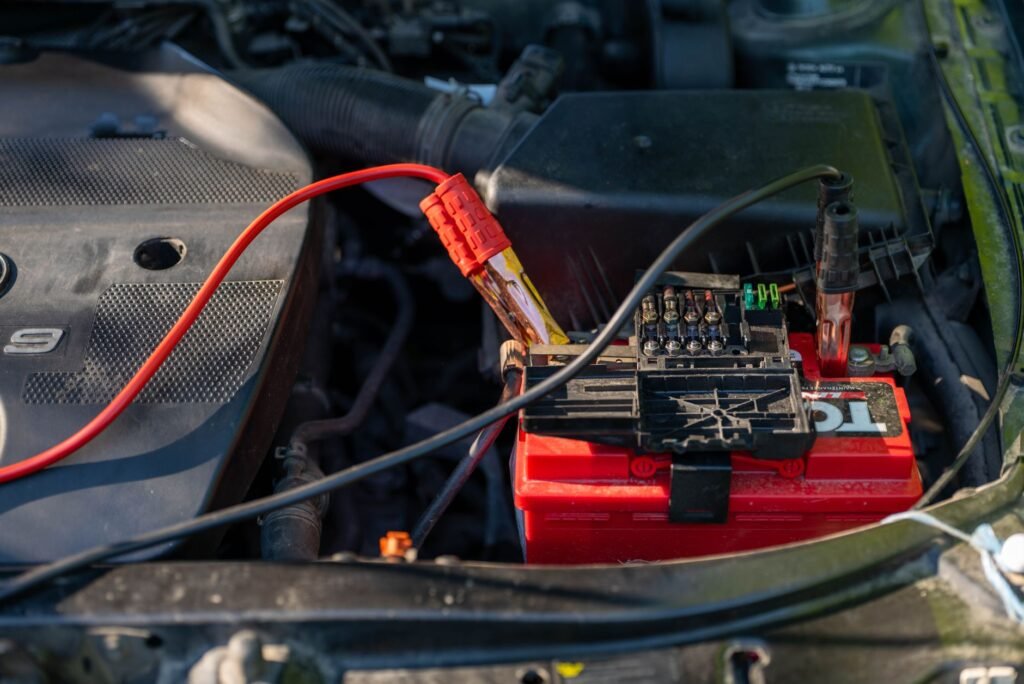
Proper battery care ensures that your lights stay on, your refrigerator remains cold, and your emergency breakaway system is ready to function. Neglecting these systems in the high heat of 2026 can lead to more than just a dead battery; it can lead to thermal runaway, a condition where the battery enters an uncontrollable self-heating cycle. This guide provides the technical blueprint for maintaining your power bank in the modern era.
Understanding Battery Chemistries in 2026
The first step in any maintenance routine is identifying what is under your battery box cover. In 2026, trailers typically utilize one of three main technologies, each with distinct charging requirements. Treating a Lithium battery like a Lead-Acid battery is one of the most common causes of premature failure in current systems.
- Flooded Lead-Acid (FLA): The legacy standard. These require checking electrolyte levels and adding distilled water. They are the most susceptible to off-gassing and corrosion.
- Absorbent Glass Mat (AGM): A sealed version of lead-acid that is maintenance-free but highly sensitive to overcharging. These are still popular in budget-friendly travel trailers.
- Lithium Iron Phosphate (LiFePO4): The 2026 industry gold standard. They offer deep discharge capabilities but require a Battery Management System (BMS) and specific charging profiles to prevent damage in cold or extreme heat.
If you are looking to replace an aging unit, you may want to consult our guide on the Best RV Lithium Battery Upgrades of 2026 to ensure compatibility with your current charger.
The Three Pillars of RV Battery Charging
Modern charging is no longer a linear process. To maximize the lifespan of your investment, your charging system must move through three distinct phases. In 2026, most ‘smart’ converters handle this automatically, but manual verification is essential for safety.
1. Bulk Charging Phase
This is the high-current phase. The charger sends maximum amperage to the battery until it reaches about 80% capacity. During this stage, it is vital to monitor for excessive heat. If your battery casing feels hot to the touch (above 115°F), your charging rate may be too high for the ambient temperature.
2. Absorption Charging Phase
Once the battery reaches 80%, the charger holds a constant voltage while the current (amperage) gradually tapers off. This is where the ‘topping off’ occurs. For LiFePO4 batteries, this phase is critical for cell balancing, ensuring that each internal cell has an equal charge.
3. Float Charging Phase
Also known as ‘trickle charging,’ this phase maintains the battery at 100% without overcharging it. In 2026, many owners make the mistake of leaving their trailers plugged in all winter without a smart float mode, which can ‘cook’ the electrolyte in AGM batteries, leading to a permanent loss of capacity.
2026 Maintenance Checklist: Monthly and Seasonal
Maintaining your battery system requires a disciplined approach. Use the following checklist to ensure your trailer remains road-ready.
Monthly Tasks
- Visual Inspection: Check for bulging cases or cracks. For lead-acid batteries, check for the ‘white fuzz’ of corrosion on terminals.
- Terminal Cleaning: Use a mixture of baking soda and water to neutralize acid on lead-acid terminals. Ensure all connections are torqued to manufacturer specifications.
- Voltage Check: Use a high-quality multimeter to check the resting voltage. A fully charged 12V lead-acid battery should read 12.6V to 12.7V. A lithium battery will stay higher, often around 13.6V.
Seasonal Tasks
- Capacity Testing: Perform a discharge test to see if your battery still holds its rated Amp-Hours.
- Firmware Updates: In 2026, your BMS and Solar Controller likely have Bluetooth connectivity. Check for manufacturer updates that optimize charging algorithms for new safety standards.
- Solar Inspection: Ensure your solar panels are clean. Dirty panels can lead to erratic charging voltages that confuse your smart controller.
Comparative Charging Standards for 2026
The following table outlines the target charging voltages for the most common 12V RV battery types currently in use.
| Battery Type | Bulk/Absorption Voltage | Float Voltage | Equalization Mode? |
|---|---|---|---|
| Flooded Lead-Acid | 14.4V – 14.6V | 13.2V – 13.4V | Yes (Every 30 Days) |
| AGM (Sealed) | 14.1V – 14.4V | 13.5V – 13.7V | No (Can Damage Seals) |
| LiFePO4 (Lithium) | 14.2V – 14.6V | 13.5V – 13.6V | No (BMS Handles Balancing) |
| Solid State (2026 Prototypes) | 14.8V+ (Specific Only) | 13.8V | Variable |
Advanced Safety: Preventing Thermal Runaway
The most dangerous failure in RV Battery Charging and Maintenance is thermal runaway. This occurs when the heat generated inside the battery exceeds its ability to dissipate it. According to guidelines from the Consumer Product Safety Commission (CPSC), battery fires in the RV sector have seen a slight uptick in 2026 due to poor ventilation in DIY battery compartments.
To prevent this, ensure your battery compartment has active or passive ventilation. Many 2026 travel trailers are now equipped with ‘Smart Vents’ that activate when the battery temperature exceeds 100°F. If you are retrofitting an older trailer, consider installing a temperature-sensitive cut-off switch. This device will disconnect the charger if the battery temperature hits a dangerous threshold, a critical fail-safe for off-grid users.
Additionally, always use a charger that features a temperature compensation probe. This probe attaches to the battery terminal and tells the charger to lower the voltage as the temperature rises. This is a standard recommendation by the RV Industry Association (RVIA) for all trailers operated in the southern United States.
Integration with Solar and DC-to-DC Systems
In 2026, the ‘power sandwich’—where a battery receives charge from solar panels, the tow vehicle alternator, and the shore power converter simultaneously—is common. However, without a centralized controller, these multiple sources can conflict. A solar controller might try to ‘Equalize’ a lead-acid battery while the tow vehicle is pushing a standard 14V charge, leading to overvoltage errors.
To solve this, modern rigs use ‘Common Bus’ architectures. If you are calculating your total power needs to ensure your charging system is appropriately sized, refer to our 2026 RV Solar Generator Sizing Guide. This ensures your charging sources aren’t overwhelming your battery bank’s Maximum Charge Rate (C-Rating).
Winterization and Long-Term Storage
Storing your batteries incorrectly during the off-season is the fastest way to kill them. In 2026, with higher extreme weather volatility, ‘set it and forget it’ storage is no longer viable.
For lead-acid and AGM batteries, they must be stored at 100% charge. A discharged lead-acid battery can freeze at temperatures as high as 20°F, causing the case to split. Lithium batteries, conversely, prefer to be stored at a partial charge—typically around 50% to 60%. Most 2026 lithium batteries feature a ‘Storage Mode’ that can be activated via an app to maintain this ideal state.
Regardless of chemistry, you should always disconnect the negative terminal or use a high-quality battery disconnect switch. Modern trailers have ‘phantom loads’—clocks, CO2 detectors, and radio memories—that can drain a battery to zero in less than two weeks if left connected without a charging source.
Troubleshooting Common 2026 Battery Issues
If your system isn’t behaving as expected, look for these three common 2026-era culprits:
- BMS High-Voltage Disconnect: If your lithium battery suddenly ‘disappears’ from your monitor, your solar controller may have spiked the voltage, causing the internal BMS to shut down for protection. You will need to ‘wake’ the battery with a specialized charger.
- Sulfation on Lead-Acid: If your lead-acid battery reaches full voltage quickly but dies almost immediately under load, it is likely sulfated. Some 2026 smart chargers have a ‘De-sulfation’ or ‘Repair’ mode that uses high-frequency pulses to break down these crystals.
- Inverter-Induced Sag: Large 3000W inverters common in 2026 trailers can cause ‘voltage sag’ if the wiring is too thin. This can trigger a low-voltage alarm even if the battery is mostly full. Check your cable gauges against NHTSA electrical safety standards for high-current RV applications.
Conclusion: The Future of Trailer Power
RV Battery Charging and Maintenance is the heartbeat of the modern camping experience. By adhering to the 2026 standards of multi-stage charging, regular physical inspections, and temperature monitoring, you can extend the life of your batteries from a mere two years to over a decade. As technology advances toward solid-state and even more efficient energy storage, the fundamentals of clean connections and correct charging profiles will remain the most important tools in your maintenance kit. Stay vigilant, monitor your monitors, and enjoy the peace of mind that comes with a reliable, safe power system.
Frequently Asked Questions
Can I charge my RV lithium battery with a standard lead-acid charger?
While it may work partially, it is not recommended. Lead-acid chargers often have an 'Equalization' mode with high voltages that can damage a Lithium BMS. In 2026, you should only use chargers with a dedicated LiFePO4 profile.
How often should I add water to my flooded RV batteries?
Check levels monthly, especially in summer. Only use distilled water, and fill only after the battery is fully charged to prevent electrolyte overflow during the charging process.
What is the safest temperature for charging an RV battery?
Most batteries should be charged between 32°F and 110°F. Charging lithium batteries below freezing can cause permanent damage, which is why 2026 models often include internal heating elements.
Why is my RV battery bulging?
A bulging case is a sign of severe overcharging or internal short-circuiting. This is a fire hazard. Disconnect the battery immediately and replace it; do not attempt to recharge a physically deformed battery.