Mastering Off-Grid Power: Why Sizing Matters in 2026
As we navigate the peak of the 2026 summer camping season, the demand for off-grid power has never been higher. With record-breaking heat domes affecting popular camping destinations across the American West, RVers are discovering that their old power setups are struggling to keep up. The release of the newest high-capacity portable power stations on August 3, 2026, marks a turning point in how we manage energy on the road. No longer are we restricted to small 1,000-watt units; the modern trailerite now has access to 5kWh and 10kWh systems that can bridge the gap between shore power and total independence.
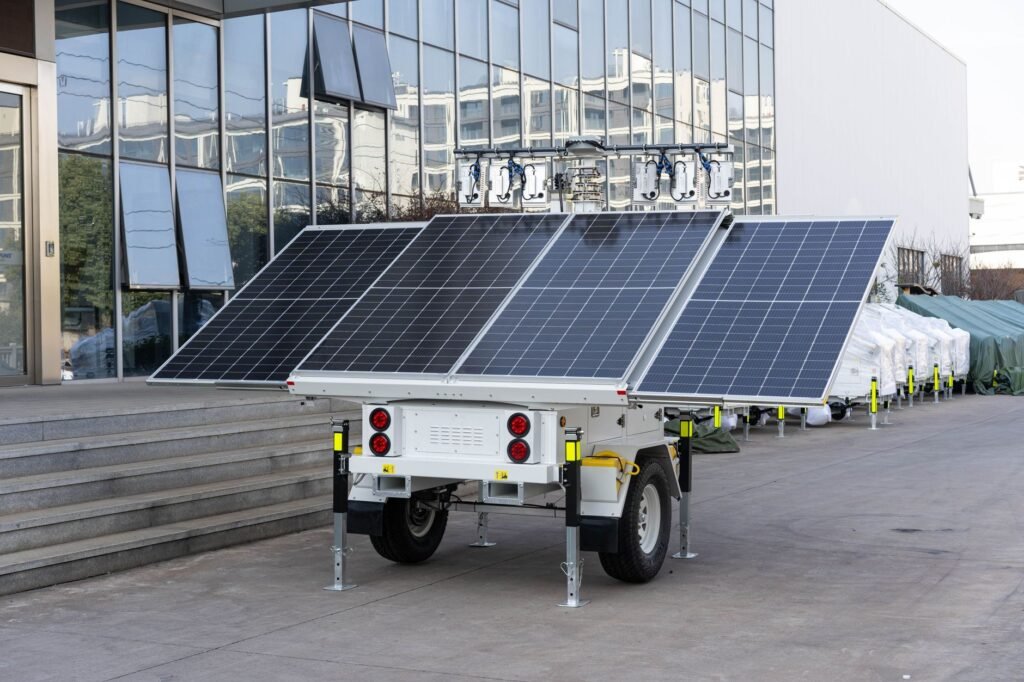
Choosing the right RV solar generator sizing in 2026 isn’t just about picking the biggest box on the shelf. It is about balancing your daily energy consumption against your ability to recharge in varying weather conditions. If you under-size your system, you risk losing your food when the 12V fridge cuts out at 3:00 AM. If you over-size, you are hauling unnecessary weight and spending thousands of dollars that could have been used for more travel. This guide will walk you through the precise steps to calculate your needs for a reliable, efficient 2026 setup.
Step 1: The 2026 RV Energy Audit
The first rule of solar sizing is that you cannot manage what you do not measure. In 2026, the energy profile of a standard travel trailer has shifted. Traditional propane-based appliances are increasingly being replaced by high-efficiency electric alternatives. This makes an energy audit more critical than ever. To begin, you need to identify every appliance you intend to run and determine its wattage and daily runtime.
Start by listing your constant loads. These are the items that are “always on” or cycle frequently throughout the day. In a modern rig, this typically includes your 12V compressor refrigerator, the RV’s water pump, LED lighting, and safety sensors (CO2 and propane detectors). Next, add your intermittent loads. These are high-wattage items used for short bursts, such as a microwave, induction cooktop, coffee maker, or hair dryer. Finally, consider your luxury/connectivity loads. In 2026, nearly every boondocker is running a high-speed satellite internet terminal and multiple mobile devices, which can draw a surprising amount of power over 24 hours.
Essential Wattage Estimations for 2026 Rigs
To calculate your daily consumption, multiply the wattage of an appliance by the number of hours you use it. For example, a 12V fridge that draws 50 watts and runs for 8 cumulative hours a day consumes 400 Watt-hours (Wh) daily. Here is a breakdown of common power draws for a 2026 camping environment:
- 12V Compressor Refrigerator: 350–600 Wh per day (highly dependent on ambient temperature).
- Starlink/Satellite Internet: 50–75 Watts (1,200–1,800 Wh per day if left on 24/7).
- LED Lighting: 10–30 Wh per evening.
- Laptop Charging (GaN Fast Chargers): 60–100 Wh per charge.
- MaxxFan/Ventilation Fan: 20–40 Watts (240–480 Wh if run all night).
- Microwave (1000W): 17 Wh per minute of use.
2026 RV Solar Generator Capacity Table
Once you have your total daily Watt-hour (Wh) requirement, use the following table to identify which class of solar generator fits your lifestyle. These recommendations assume you want at least two days of autonomy in case of cloudy weather.
| Camper Type | Daily Usage (Wh) | Recommended Capacity (kWh) | Solar Input Required (W) |
|---|---|---|---|
| Minimalist / Teardrop | 400–800 Wh | 1.0 – 2.0 kWh | 200W – 400W |
| Mid-Size Travel Trailer | 1,500–3,000 Wh | 3.6 – 5.0 kWh | 600W – 800W |
| Full-Timer / Fifth Wheel | 4,000–8,000 Wh | 7.0 – 12.0 kWh | 1,200W+ |
Understanding Battery Chemistry: LFP vs. Solid-State
When selecting your unit in 2026, the chemistry inside the box matters just as much as the capacity on the label. Most high-end portable power stations now use Lithium Iron Phosphate (LiFePO4 or LFP). These are favored for their safety and longevity, often rated for 3,000 to 5,000 cycles. However, as noted in our guide to RV Solid-State Battery Conversion, solid-state technology is beginning to enter the portable market, offering even higher energy density and faster charging speeds.
For most RVers in 2026, LFP remains the sweet spot for value. It is important to remember that most modern solar generators allow you to use 100% of the stated capacity (unlike old lead-acid batteries, which should only be used to 50%). When sizing, look for a unit that offers expandable battery modules. This allows you to start with a 3.6kWh base and add more capacity later if you decide to upgrade to an electric air conditioning unit.
The Solar Recharge Reality: Don’t Forget the Sun
A 5kWh battery is useless if you can’t fill it back up. In the RV world, solar panels are your fuel pump. In 2026, solar panel efficiency has improved significantly, with many portable bifacial panels reaching 23% efficiency. However, environmental factors in August can still hamper performance. Smoke from wildfires, haze, and extreme heat can reduce panel output by 10–20%.
A good rule of thumb is the “4-Hour Rule.” Even in mid-summer, you should only count on 4 to 5 hours of peak solar production. To calculate your needed solar array, divide your daily Watt-hour consumption by 4. If you consume 2,000 Wh per day, you need at least 500 Watts of solar panels just to break even. To actually charge the battery while using power, we recommend over-sizing your solar array by 25–30%.
Managing the Heat: Why Capacity Drops in August
August presents a unique challenge for RV solar generator sizing. Batteries do not like extreme heat. Most units have internal cooling fans, but if the ambient temperature inside your storage bay or trailer exceeds 100°F, the generator’s management system may throttle the charging or discharging speed to protect the cells. This efficiency loss means you might get 10–15% less usable energy than you would in the spring.
Furthermore, running your RV’s air conditioning on solar remains the “holy grail” of boondocking. While it is possible, as discussed in our deep dive on running RV AC on solar power, it requires massive capacity. A standard 13,500 BTU AC unit can pull 1,200–1,500 Watts continuously. Even a large 10kWh solar generator will only sustain that for about 6 to 7 hours without significant solar help.
Integration: Connecting to Your Rig’s 30A or 50A Inlet
The newest 2026 models from manufacturers like EcoFlow and Jackery feature dedicated 30-amp AC outlets. This allows you to plug your entire trailer directly into the generator using your standard shore power cord. However, you must be aware of the “Neutral-Ground Bonding” issue. Some RV systems will detect an open ground when plugged into a portable generator and refuse to pass power to the outlets. Ensure your 2026 generator is designed with an internal bonding switch or use a specific neutral-ground bonding plug to satisfy your rig’s EMS (Electrical Management System).
Additionally, pay attention to the inverter’s surge rating. While your average draw might be low, the “startup surge” of a rooftop AC unit or a vacuum cleaner can be double the running wattage. Ensure your solar generator’s inverter can handle at least 4,000 to 6,000 watts of peak surge to avoid tripping the internal breaker.
Buying Advice: New vs. Used in 2026
With the rapid pace of technological change, the secondary market for portable power stations is booming in 2026. You may find great deals on 2024 or 2025 models. When buying used, always check the cycle count in the manufacturer’s app. For LFP units, anything under 500 cycles is practically new. However, ensure that older units are compatible with modern high-voltage solar panels, as newer 400W+ portable panels often exceed the voltage input limits of generators made just three years ago.
According to the Department of Energy, solar efficiency and battery storage are critical components of the national move toward sustainable energy, and these consumer-grade units are benefiting from that massive R&D investment. For the safest experience, always consult NHTSA RV safety guidelines when modifying your trailer’s electrical system or adding significant weight to your cargo carrying capacity.
2026 Solar Generator Sizing Checklist
- Identify total daily Watt-hours (Amps x Volts x Hours).
- Multiply by 1.2 to account for inverter efficiency loss (usually 10–20%).
- Choose a battery capacity that offers at least 1.5x your daily needs.
- Verify the solar charge controller’s max voltage (VDC) matches your panels.
- Ensure the unit has a 30A or 50A outlet if you want to power the whole rig.
- Check for “Pass-Through Charging” capability to use power while recharging.
Conclusion: Peace of Mind on the Road
Sizing your RV solar generator correctly for the 2026 season is the difference between a stressful trip and a seamless adventure. By conducting a thorough energy audit and understanding the realities of solar recharge rates, you can build a system that supports your lifestyle without weighing you down. As solar technology continues to evolve, the ability to harvest free energy from the sun remains the most liberating upgrade any trailer owner can make.
Frequently Asked Questions
How many solar panels do I need for a 5kWh solar generator?
To fully recharge a 5kWh unit in one day of 2026 summer sun, you typically need between 800W and 1,200W of solar panels, assuming 5 hours of peak sunlight and 80% real-world efficiency.
Can I run my RV air conditioner on a portable solar generator?
Yes, but you need a high-capacity unit (typically 5kWh or more) with a high-surge inverter. A 13,500 BTU AC will consume roughly 1.5kWh per hour, so a 5kWh battery would provide about 3 hours of cooling without continuous solar support.
What is the difference between Wh and Ah in RV batteries?
Watt-hours (Wh) measure total energy capacity, while Amp-hours (Ah) measure charge. In 2026, Wh is the preferred metric for solar generators because it accounts for different system voltages (12V, 24V, or 48V).
Does heat affect my solar generator’s performance?
Yes. In temperatures exceeding 100°F, lithium batteries may experience reduced discharge efficiency, and solar panels can lose up to 15% of their output efficiency due to thermal resistance.