The I-40 Incident: Why Livestock Trailer Security is Trending in 2026
On August 11, 2026, commuters on I-40 in Iredell County witnessed a high-stakes drama that highlights the inherent risks of livestock transport. An Angus bull escaped from a trailer in transit, leading to a complex recovery operation that utilized tactical drones to guide the animal to safety. This incident serves as a stark reminder that even the most experienced haulers are at the mercy of mechanical integrity and animal behavior. As we move through 2026, the Livestock Trailer Safety Guide 2026 has evolved to include not just mechanical checks, but also technological interventions to manage roadside emergencies.
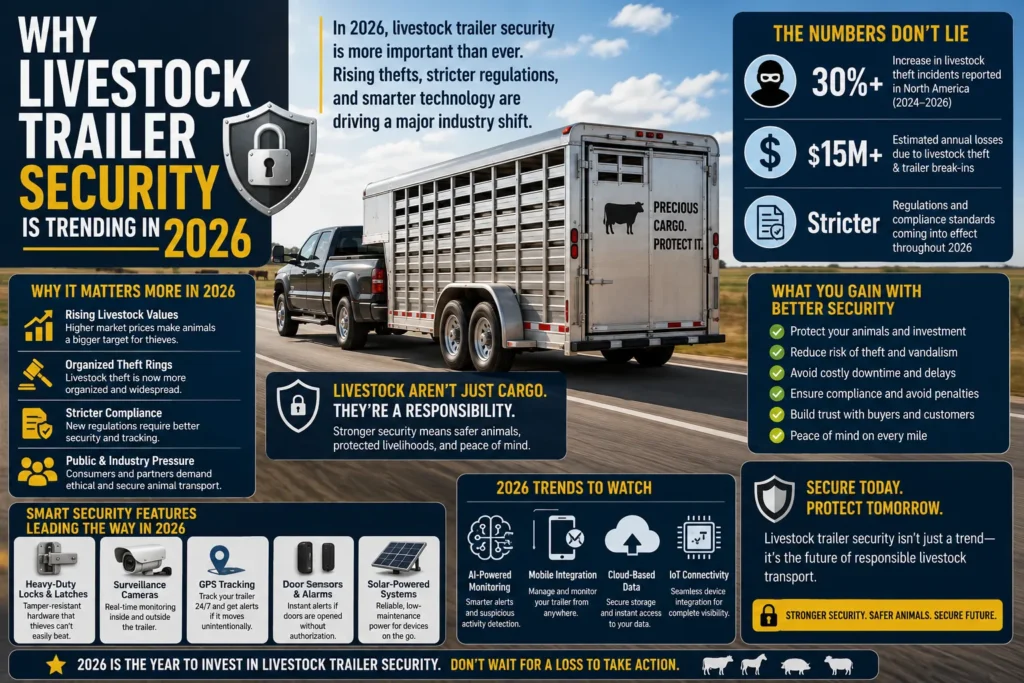
Transporting live cargo is fundamentally different from hauling a travel trailer or a boat. Animals represent a shifting center of gravity, and their unpredictable nature can stress latches and hinges in ways static cargo cannot. Whether you are hauling a single horse or a full load of cattle, understanding the 2026 standards for trailer security is essential for the safety of the animals, the driver, and the general public.
The Anatomy of a Failure: Why Trailer Doors Open
Mechanical failure in livestock trailers typically stems from three areas: latch fatigue, frame torque, and animal-induced stress. In the recent I-40 event, the escape was a result of a breach that occurred while the vehicle was at highway speeds. To prevent such occurrences, owners must look beyond the standard visual check.
- Vibration-Induced Latch Release: High-speed travel on uneven pavement can cause traditional slide-bar latches to vibrate out of their housing if not secured with a secondary pin.
- Frame Torque: When a trailer hits a significant pothole or takes a sharp turn, the frame can flex momentarily. If the door tolerances are too tight or the hinges are worn, this flex can cause a slam-latch to pop open.
- Animal Pressure: Large livestock can lean or kick against the rear or side doors. In 2026, premium trailers are now utilizing reinforced ‘Internal Compression Bars’ to take the weight off the primary door during transit.
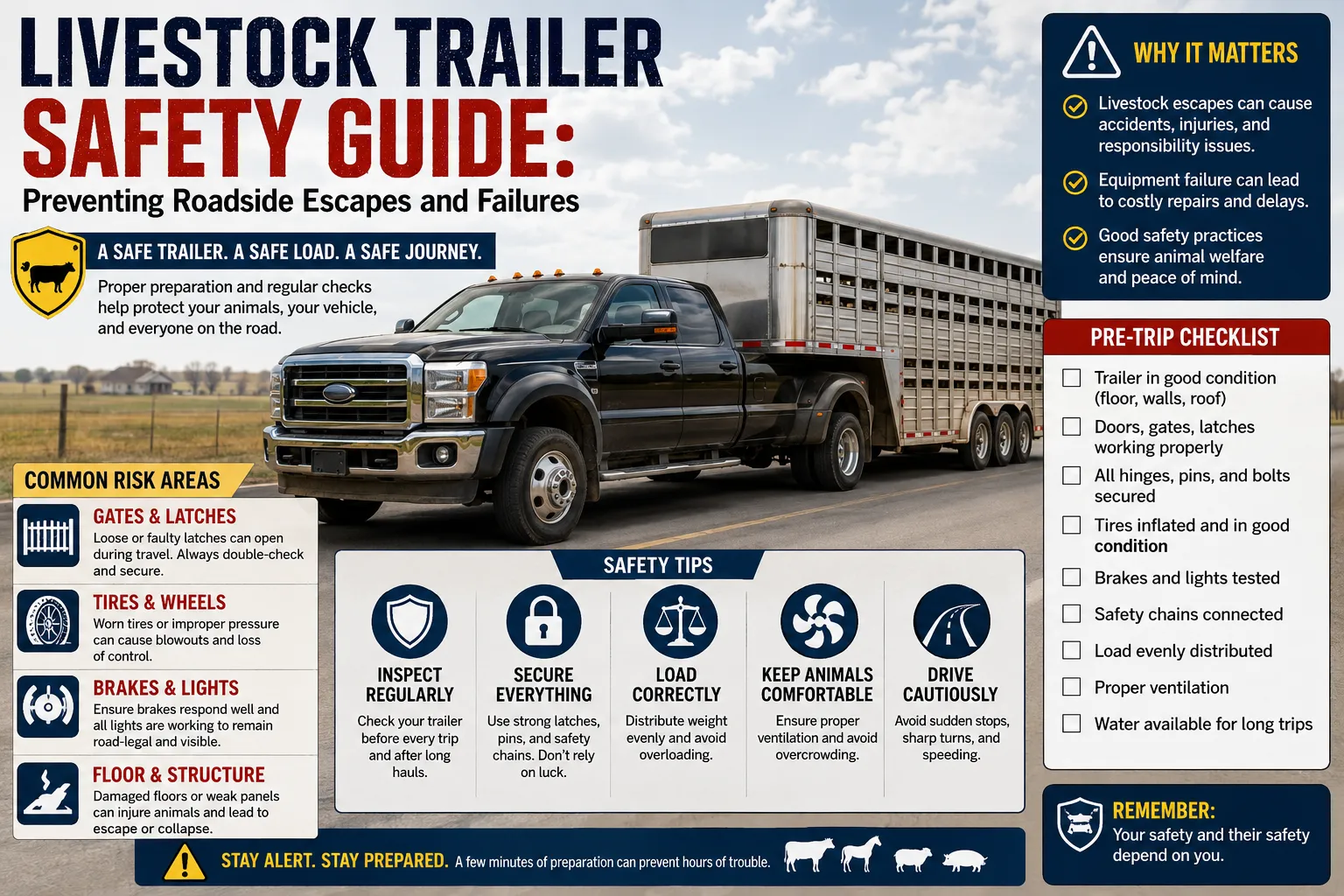
2026 Livestock Trailer Pre-Trip Inspection Checklist
Before any animal steps onto the ramp, a comprehensive inspection is required. This goes beyond the basics found in a general trailer maintenance checklist, focusing specifically on the structural integrity required for live loads.
| Component | What to Check | 2026 Safety Standard |
|---|---|---|
| Slam Latches | Spring tension and engagement depth | Must have a secondary manual locking pin |
| Floor Planking | Rot in wood or corrosion in aluminum | Non-slip rubber matting with no gaps > 1 inch |
| Hinges | Grease points and pin wear | Self-lubricating heavy-duty brass bushings |
| Tires | Sidewall cracks and PSI | Load Range E or G (10-14 ply) for livestock |
| Ventilation Slats | Obstructions or sharp edges | Adjustable sliders for varying weather conditions |
The Role of Secondary Securement
The single most effective way to prevent a roadside escape is the use of secondary securement. In 2026, safety experts recommend that no livestock trailer door rely solely on a single latching mechanism. Utilizing heavy-duty carabiners, padlocks, or even specialized transport pins through the latch handle can ensure that even if the primary mechanism fails, the door remains shut. This is a critical addition to your RV towing safety equipment 2026 arsenal, even for those hauling livestock instead of camping gear.
Emerging Technology: Drones and GPS in Livestock Hauling
The I-40 recovery was notable for its use of a tactical drone. This represents a major shift in how the industry handles animal escapes. In the past, a loose bull on a highway often resulted in a dangerous high-speed chase or, unfortunately, the need to dispatch the animal to protect human life. Today, local law enforcement agencies are increasingly trained in using thermal-imaging drones to track and guide animals away from traffic.
For the private hauler, 2026 technology offers internal trailer cameras that sync with smartphone apps. These cameras allow the driver to monitor the animals in real-time, identifying if an animal is stressed or if a partition has come loose before a crisis occurs. High-end livestock trailers are also being equipped with ‘Hatch Sensors’ that alert the driver via a dashboard notification if a rear door latch is no longer fully engaged.
Emergency Protocols: What to Do if an Animal Escapes
If you experience a trailer failure and an animal escapes onto a public roadway, your actions in the first 60 seconds are critical. According to guidelines from the Federal Motor Carrier Safety Administration (FMCSA), the safety of human life always takes precedence over the recovery of the animal.
- Secure Your Vehicle: Move your truck and trailer as far onto the shoulder as possible. Turn on your hazard lights and set out reflective triangles or flares.
- Call 911 Immediately: A loose animal on a highway is a major traffic hazard. Notify authorities of your exact location, the type of animal, and the direction it is heading.
- Do Not Chase the Animal: Chasing an escaped bull or horse will likely drive it further into traffic or cause it to panic. If possible, wait for professional recovery or law enforcement assistance.
- Use the Trailer as a Catch-Pen: If the animal remains near the trailer, try to position the vehicle to create a natural funnel back toward the ramp, but only if it does not put you in the path of traffic.
Structural Differences: Horse vs. Cattle Trailers
While often grouped together, the safety requirements for horse trailers and cattle trailers differ significantly due to the center of gravity and the temperament of the animals. Horses are typically taller and more prone to rearing, requiring higher interior clearance and padded dividers. Cattle, specifically bulls or heavy steers, exert more lateral force on the trailer walls and doors.
When selecting a trailer in 2026, ensure the Gross Vehicle Weight Rating (GVWR) accounts for the maximum possible weight of the livestock plus the weight of the trailer itself. Overloading is a leading cause of tire blowouts and axle failure in the livestock sector. You can find detailed regulations on animal welfare during transport via the USDA Animal and Plant Health Inspection Service (APHIS).
Ventilation and Temperature Control
In 2026, climate-related stress is a major focus of trailer safety. Heat exhaustion can lead to animals collapsing inside the trailer, which can cause the vehicle to sway or even flip. Modern trailers should be equipped with temperature sensors and high-flow fans if you are hauling in regions where temperatures exceed 90 degrees Fahrenheit. Proper ventilation is not just about comfort; it is a mechanical safety requirement that prevents the shifting of weight due to animal distress.
Legal and Insurance Implications for 2026
The legal landscape for trailer escapes has tightened significantly. In many states, the ‘strict liability’ rule applies to livestock owners. If an animal escapes due to a preventable mechanical failure—such as a worn latch or a lack of secondary pins—the owner can be held liable for any resulting traffic accidents, property damage, or injuries. Insurance companies in 2026 are increasingly requiring proof of regular maintenance and the use of industry-standard locking mechanisms to maintain coverage for ‘Cargo Loss’ and ‘Third-Party Liability.’
Summary: The Future of Safe Hauling
The Livestock Trailer Safety Guide 2026 emphasizes that prevention is a multi-layered approach. It begins with the mechanical integrity of the trailer, continues through rigorous pre-trip inspections, and is supported by modern technology like internal cameras and drone-assisted recovery. By learning from incidents like the I-40 bull escape, haulers can better prepare for the unexpected and ensure that their animals—and their reputations—remain secure on the road.
Frequently Asked Questions
What is the best way to prevent a livestock trailer door from opening accidentally?
Always use a secondary securement method, such as a manual locking pin, a heavy-duty carabiner, or a padlock, in addition to the primary slam-latch or slide-bar.
Can drones really help in recovering escaped livestock?
Yes, in 2026, law enforcement and recovery specialists use tactical drones with thermal imaging to track escaped animals and guide them toward safety without the need for high-risk chases.
How often should I inspect the flooring of my livestock trailer?
Flooring should be inspected before every trip. Look for rot in wood or corrosion in aluminum, and ensure rubber matting is secure to prevent animals from slipping and causing a weight shift.