If you’ve heard whispers of a land where sapphire seas meet dramatic limestone peaks, you’ve likely heard of Montenegro. Despite its growing reputation as a luxury travel destination, many people still find themselves asking: “Where exactly is it on the map?”
Whether you are a geography buff or a traveler planning your next escape, this guide provides everything you need to know about the location and landscape of this Balkan treasure.
1. The Geographic Coordinates: Europe’s Best Kept Secret
Montenegro is situated in Southeastern Europe on the Balkan Peninsula. It occupies a prime piece of real estate along the eastern shores of the Adriatic Sea.
If you were to draw a straight line west across the water from Montenegro’s coast, you would land squarely on the shores of Italy. This strategic position has made it a historical crossroads between Eastern and Western Europe for centuries.
- Total Area: 13,812 sq km (roughly the size of Connecticut).
- Coastline: 294 km of stunning Mediterranean beaches and cliffs.
2. Mapping the Borders: Who are the Neighbors?
Montenegro is a compact country, but it packs a lot of variety into its borders. It shares its frontiers with five different neighbors:
- Northwest: Croatia (The gateway to the famous city of Dubrovnik).
- West: Bosnia and Herzegovina (A rugged, mountainous border).
- Northeast: Serbia (Connecting Montenegro to the heart of the Balkans).
- East: Kosovo (Bordered by the majestic “Accursed Mountains”).
- Southeast: Albania (Divided by the vast and beautiful Lake Skadar).
3. The Three Faces of Montenegro’s Landscape
To understand where Montenegro is, you must understand its dramatic verticality. The country’s name, Crna Gora, literally translates to “Black Mountain.” Its geography is divided into three distinct zones:
The Coastal Lowlands
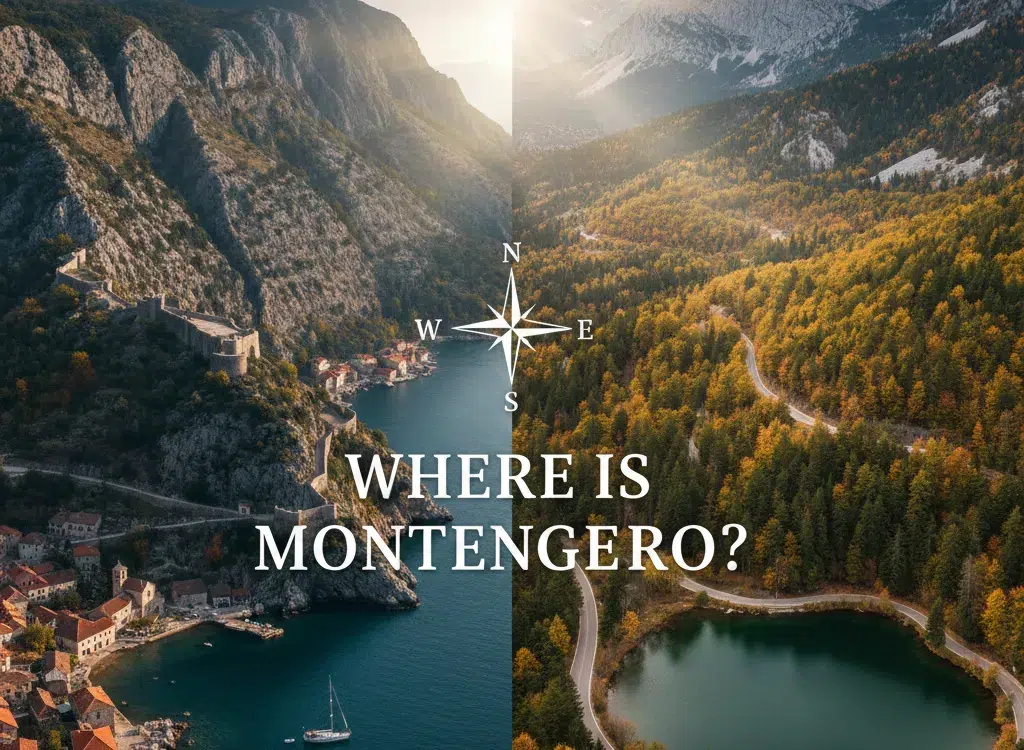
Home to the world-renowned Bay of Kotor, this area feels like the Norwegian fjords met the Italian Riviera. It is characterized by ancient stone towns like Budva and Perast, framed by steep mountains that plunge directly into the sea.
The Central Plain
Moving inland, the terrain levels out into the Zeta and Morača river valleys. Here you will find the capital city, Podgorica, and Lake Skadar—the largest lake in Southern Europe and a sanctuary for the rare Dalmatian Pelican.
The High Highlands
The north is dominated by the Dinaric Alps. This is home to Durmitor National Park and the Tara River Canyon, which is the deepest canyon in Europe and the second deepest in the world (after the Grand Canyon).
4. Vital Facts for the Modern Traveler
If you are planning to visit this “Black Mountain” paradise, here is the essential data at a glance:
| Category | Information |
| Political Status | Sovereign State (Independent since 2006) |
| Currency | Euro (€) (Despite not being in the EU yet) |
| Main Airports | Podgorica (TGD) and Tivat (TIV) |
| Time Zone | Central European Time (CET / UTC+1) |
| Topography | 80% Mountainous |
5 Must-Visit Gems in Montenegro
If you are planning a trip to this Balkan beauty, these five destinations offer the most authentic and breathtaking experience of “The Black Mountain.”
1. Kotor & The Bay of Kotor
Often called the “Jewel of Montenegro,” this UNESCO World Heritage site is non-negotiable.
- The Vibe: Medieval charm meets dramatic fjord-like scenery.
- Don’t Miss: The hike up to St. John’s Fortress (1,350 steps) for a panoramic view of the orange-roofed town against the deep blue bay.
2. Durmitor National Park
For those who prefer alpine air to salty breezes, Durmitor is a paradise of glacial lakes and limestone peaks.
- The Vibe: Untamed, rugged, and peaceful.
- Don’t Miss: A walk around Black Lake (Crno Jezero) or a rafting trip through the Tara River Canyon, the deepest canyon in Europe.
3. Sveti Stefan
This is the “postcard” of Montenegro. Once a fortified village to protect against pirates, it is now an world-class exclusive island resort.
- The Vibe: High-end luxury and historical elegance.
- Don’t Miss: Even if you aren’t staying at the resort, the pink-sand beaches and the viewpoint from the main road above provide the perfect photo opportunity.
4. Lake Skadar
Shared with Albania, this is the largest lake in the Balkans and a sanctuary for over 280 bird species, including the rare Dalmatian Pelican.
- The Vibe: Serene, green, and traditional.
- Don’t Miss: A traditional wooden boat tour from the village of Virpazar, followed by a tasting of local Vranac red wine.
5. Perast
Just a short drive from Kotor lies this tiny, quiet town that feels like a frozen moment in Venetian history.
- The Vibe: Romantic, quiet, and architecturally stunning.
- Don’t Miss: A boat ride to the man-made islet of Our Lady of the Rocks, which houses a beautiful 17th-century church and museum.
When to Visit: A Seasonal Guide
Because of its unique geography, Montenegro essentially has two climates: a Mediterranean coast and a sub-alpine interior. Here is how to choose your window:
1. The Sweet Spot: May, June & September (Shoulder Season)
This is widely considered the best time to visit.
- The Weather: Temperatures are a pleasant 20°C to 25°C. The Adriatic is warm enough for swimming by late May, yet the mountain air remains crisp.
- The Perk: You avoid the massive cruise ship crowds in Kotor and the high-season hotel prices. It is the ideal time for hiking and photography.
2. Peak Summer: July & August
- The Weather: Hot and sunny, often exceeding 30°C.
- The Vibe: The coast is electric. Expect beach parties, open-air festivals, and a bustling nightlife in Budva.
- Pro Tip: If the coastal heat becomes too much, head north to Durmitor National Park, where the mountains offer a natural, cool escape.
3. The Golden Autumn: October
- The Weather: Mild days and cool nights.
- The Perk: Autumn is a “hidden gem” season. You can witness the spectacular changing colors of the leaves in Biogradska Gora (one of Europe’s last three virgin forests) and enjoy the local wine and olive harvests.
4. Winter Magic: December to March
- The Weather: Cold and snowy in the north; mild but rainy on the coast.
- The Activity: Montenegro is a burgeoning budget-friendly destination for skiing and snowboarding. Towns like Kolašin and Žabljak transform into winter wonderlands with cozy chalets and affordable lift passes.
Summary Table: When to Go?
| Goal | Best Months |
| Beach & Swimming | June – September |
| Hiking & Nature | May, June, September, October |
| Avoiding Crowds | April, May, October |
| Skiing & Snowboarding | January – March |
Conclusion: A Small Country with a Big Presence
Montenegro may be small, but its location is its greatest asset. It is a rare place where you can enjoy a morning coffee in a medieval coastal piazza and an afternoon hike in a sub-alpine forest. Its position in the heart of the Mediterranean makes it easily accessible from all major European hubs, yet it still feels like a world of its own.