The Shift From Calendar to Mileage-Based Trailer Maintenance
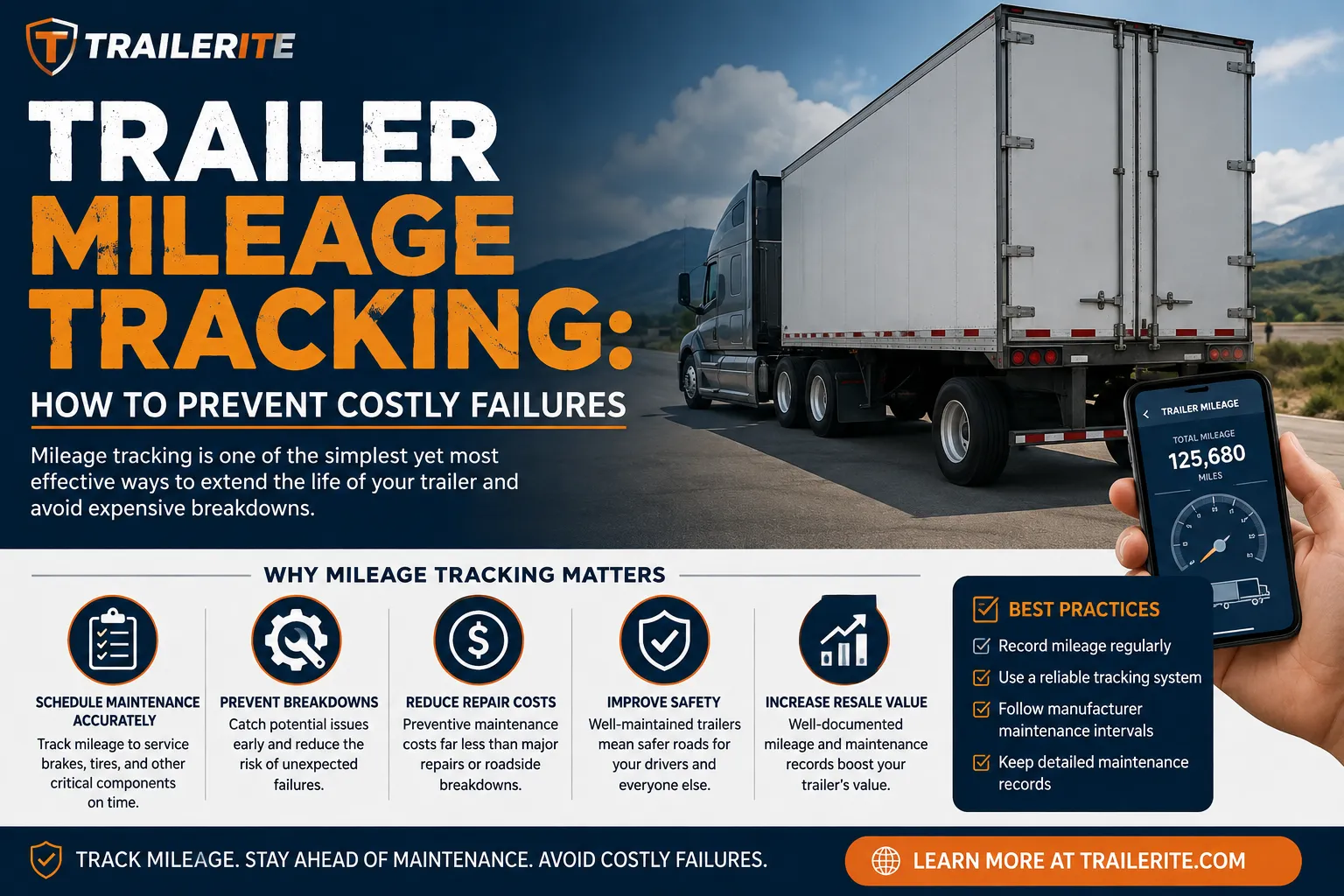
How many miles are actually on your trailer right now? If you are like the vast majority of recreational RVers, utility trailer operators, and commercial haulers, your answer is likely a rough estimate. For decades, trailer owners have relied on calendar-based maintenance schedules—such as repacking wheel bearings once a year or checking tires every six months. However, this outdated approach is inherently flawed. If you only tow your travel trailer three times a year, annual service may be an unnecessary expense. Conversely, if you are a full-timer or a commercial hotshot driver covering 15,000 miles in a single season, waiting 12 months for service is a recipe for a catastrophic roadside failure.
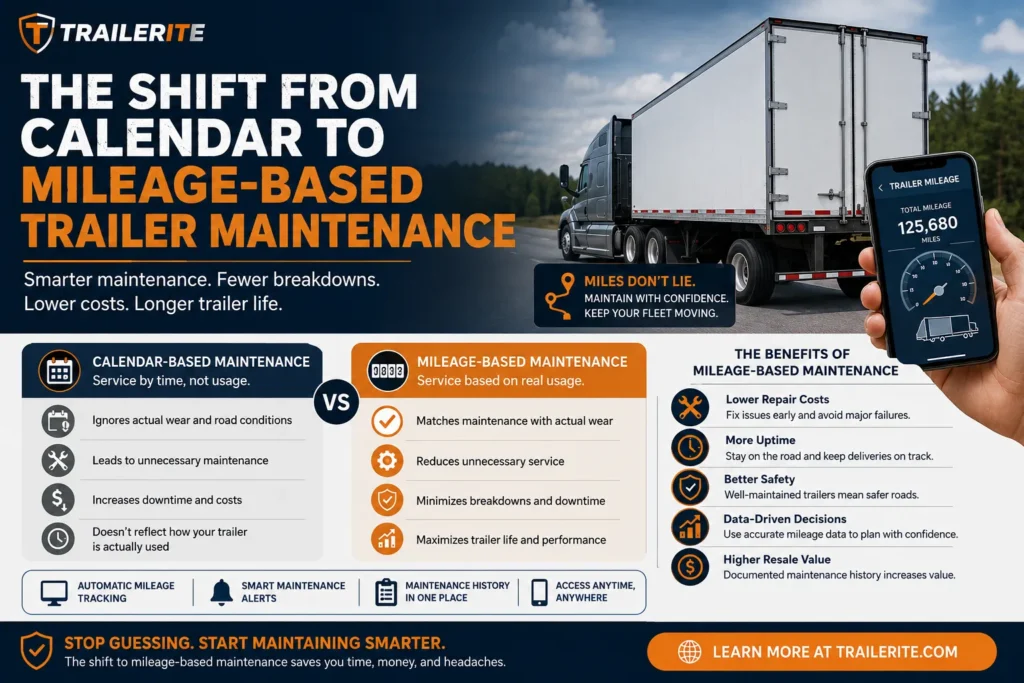
With the recent late August 2026 release of advanced, wireless electronic trailer odometers, trailer mileage tracking has finally entered the digital age. This technological shift allows towing operators to transition from guessing to utilizing precise, data-driven maintenance. By implementing an accurate tracking system, you can perform maintenance exactly when your equipment needs it, dramatically lowering the risk of axle lockups, brake failures, and high-velocity tire blowouts.
According to reports from leading fleet publications like Overdrive Online, truck and trailer maintenance costs have continued to climb, making preventative maintenance more financially critical than ever before. Knowing the exact wear and tear on your trailer components is no longer a luxury; it is a necessity for keeping your rig safe and your travel budget intact.
Why Guessing Trailer Mileage Leads to Catastrophic Failures
When you drive a tow vehicle, your dashboard constantly displays your odometer. You know exactly when your engine oil needs to be changed or when your tires are due for a rotation. Your trailer, however, has historically been a ‘black box.’ It is frequently unhooked, parked for months, or towed by different vehicles, making manual mileage logging highly prone to human error.
This lack of visibility directly compromises safety. Trailer components face harsher operating conditions than passenger vehicles. Trailer brakes, particularly electric drum systems, wear down rapidly under heavy loads. Wheel bearings spin at incredibly high revolutions per minute, relying on a thin layer of specialized grease to prevent metal-on-metal friction. If that grease degrades or leaks out, the friction generates extreme heat, eventually welding the bearing to the spindle and causing the entire wheel assembly to shear off on the highway.
By utilizing modern trailer mileage tracking, you eliminate the guesswork. You can track exact service intervals for every critical component, ensuring you inspect and service high-wear items before they reach their failure threshold.
Your Options for Trailer Mileage Tracking: From Classic to cutting-Edge
Fortunately, trailer owners today are no longer limited to keeping a paper notebook in the glove box. Several distinct technologies are available to capture precise mileage data, ranging from classic mechanical tools to smart, cloud-connected digital sensors.
1. Mechanical Hubodometers
A hubodometer (often shortened to ‘hubometer’) is a classic, bulletproof tool widely used in the commercial shipping industry. It is a sealed mechanical device that mounts directly to the center of one of the trailer’s wheel hubs. As the wheel rotates, an internal counter tracks the revolutions and translates them into mileage on an analog display. Hubodometers are incredibly durable, require no batteries, and are completely waterproof. However, they must be ordered specifically to match your exact tire size, and you must physically walk to the side of the trailer to read the mileage.
2. Electronic and Wireless Trailer Odometers
The newest development in trailer maintenance technology is the wireless electronic odometer. These compact sensors mount to the hub or axle assembly and use internal accelerometers or magnetic sensors to detect wheel rotation. They sync wirelessly via Bluetooth to a smartphone application on your dashboard. When you hook up your trailer, the app automatically begins logging mileage, sending real-time alerts directly to your phone when a maintenance threshold is reached. This is the ultimate ‘set-it-and-forget-it’ solution for modern trailer owners.
3. GPS Telematics and Smart Trackers
For those who want security alongside mileage tracking, GPS telematics devices are an excellent choice. These units are typically wired into the trailer’s 12V electrical system (often near the house batteries or junction box) or run on long-lasting internal lithium batteries. GPS trackers monitor the precise location of your trailer, calculating distance traveled via satellite coordinate changes. In addition to providing highly accurate mileage logs, they offer anti-theft geofencing, allowing you to track your trailer’s location in real time if it is ever stolen.
Tracking Methods Compared
Choosing the right tool depends heavily on your budget, the complexity of your rig, and whether you prefer manual checks or automated smartphone alerts.
| Tracking Method | Installation Difficulty | Accuracy | Power Source | Best For |
|---|---|---|---|---|
| Mechanical Hubodometer | Moderate (Requires mounting to wheel cap) | Excellent (If matched to tire size) | None (Mechanical) | Utility trailers, commercial fleets, heavy-haul rigs |
| Wireless Electronic Odometer | Easy (Peel-and-stick or simple bolt-on) | Excellent | Internal battery (Multi-year life) | Travel trailers, fifth wheels, DIY enthusiasts |
| GPS Telematics Tracker | Moderate (Wiring to 12V or solar mounting) | Very Good (Depends on signal strength) | 12V vehicle power or solar | High-value trailers, remote monitoring, security-focused owners |
| Manual GPS Apps / Trip Logs | None (Software only) | Moderate (Relies on user memory) | Smartphone battery | Occasional weekend campers, tight budgets |
The Ultimate Mileage-Based Trailer Maintenance Schedule
Once you have established an accurate system for trailer mileage tracking, you can implement a precise maintenance protocol. While calendar guidelines are useful safety nets, servicing your rig based on actual travel distance is far more effective. Below is the industry-standard mileage-based maintenance guide for light to medium-duty trailers, compiled from leading safety analyses published by Heavy Duty Trucking.
The 50 to 100 Mile Break-In Check
Whenever you purchase a brand-new trailer, install new wheels, or complete a wheel bearing service, you must check your wheel lug nuts. New wheels and studs undergo an initial seating process, which can cause lug nuts to loosen slightly under load. Always use a calibrated torque wrench to verify that your lugs are tightened to the manufacturer’s exact foot-pound specification within the first 100 miles of travel.
Every 3,000 Miles: Braking and Coupler Inspections
At the 3,000-mile mark, perform a hands-on walkaround of your trailer’s connection and braking systems:
- Brake Adjustments: If your trailer is equipped with manual-adjust electric drum brakes, check their clearance and adjust them to ensure even stopping power across all hubs.
- Coupler and Safety Chains: Inspect the trailer coupler for structural cracks, wear, or latch deformation. Ensure your safety chains and breakaway switch cable are completely intact, free of rust, and functioning correctly.
- Tire Pressure and Tread: Measure tire pressures when the tires are cold. Inspect the tread for uneven wear, which could indicate a bent axle or suspension misalignment.
Every 6,000 Miles: Suspension Lubrication and Tire Rotations
For mid-range travel intervals, focus on your trailer’s ride quality and tire longevity:
- Suspension Lubrication: If your trailer features ‘wet bolts’ or greaseable suspension shackles, pump high-quality marine-grade grease into the zerk fittings until fresh grease emerges. This keeps your leaf springs moving smoothly and prevents squeaking and premature bushing wear.
- Tire Rotation: Rotate your trailer tires to distribute tread wear evenly across all positions. This is especially critical on dual-axle setups where the front and rear tires experience vastly different scrubbing forces during tight turns.
Every 12,000 Miles: The Comprehensive Hub and Axle Overhaul
The 12,000-mile mark is the most critical milestone for any trailer. At this point, you must perform a comprehensive hub and axle teardown. Neglecting this milestone is the primary cause of roadside wheel separations.
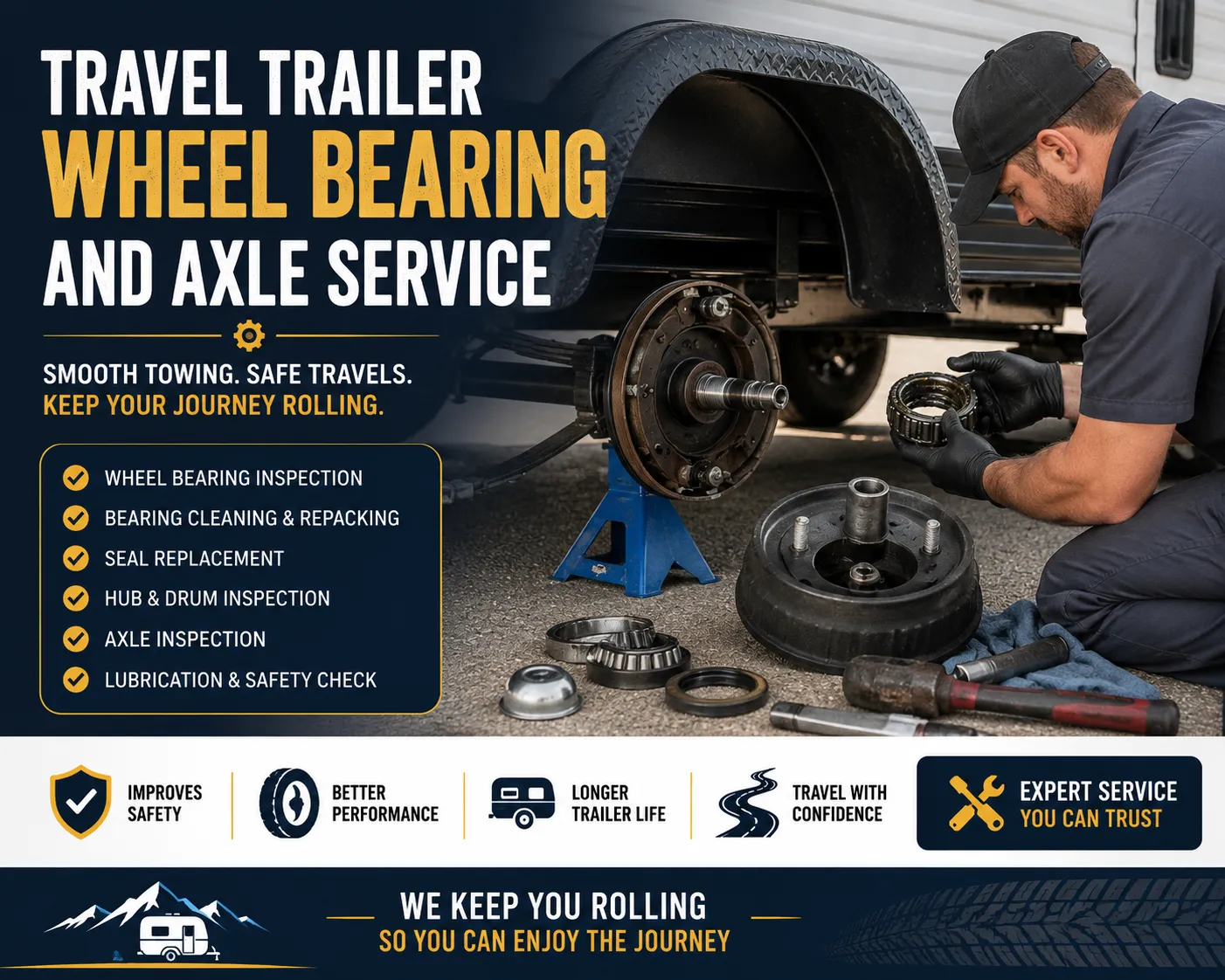
- Bearing Repacking: Carefully pull the wheel hubs, clean away all old grease, and inspect the bearing rollers and races for pitting, discoloration, or heat scoring. If they are in pristine condition, repack them with fresh, high-temperature wheel bearing grease.
- New Inner Seals: Always replace the double-lip inner grease seals during a teardown. Reusing old seals almost always results in grease leaking onto your brake assemblies, ruining your stopping power.
- Brake Magnet Inspection: Examine your electric brake magnets and brake shoes. Replace any magnets that show uneven wear, exposed copper wiring, or physical damage.
How to Integrate Mileage Tracking Into Your Regular Maintenance Workflow
Investing in a tracking tool is only half the battle; you must build it into your standard routine to get the full safety benefits. Here is a practical, step-by-step workflow to help you stay organized:
First, establish your tracking baseline. Whether you install a mechanical hubodometer or sync a new smart app, write down your starting mileage. If your trailer has already been on the road, make an educated estimate of its current lifetime mileage and enter that as your baseline. This baseline serves as the starting point for your master trailer maintenance checklist.
Second, set up recurring digital alerts. If you use a Bluetooth odometer or GPS telematics system, input your maintenance thresholds (3,000, 6,000, and 12,000 miles) directly into the companion software. The app will automatically push notifications to your smartphone when a milestone is approaching, giving you plenty of time to purchase parts or book an appointment at a qualified service shop.
Third, document every service detail. Keep a digital logbook or folder containing receipts, dates, and the exact mileage at which each service was performed. This level of documentation is invaluable. Not only does it help you identify recurring mechanical issues, but it also provides crucial proof of care if you ever need to file a manufacturer warranty claim or sell your trailer to a new owner in the future. Accurate logs tell you precisely when to schedule your next wheel bearing and axle service, keeping your travels stress-free.
Final Thoughts: The Future of Smarter, Safer Towing
Towing a trailer inherently introduces risk. You are managing a heavy, dynamic load that reacts constantly to wind, road conditions, and sudden traffic changes. The absolute best way to mitigate that risk is by ensuring your running gear is in flawless mechanical condition. By upgrading your rig with a modern trailer mileage tracking system, you transition from reactive, emergency repairs to proactive, precision maintenance. You will save money, extend the lifespan of your tires and brakes, and gain invaluable peace of mind on the open road. Don’t wait for a roadside blowout to tell you that your trailer has traveled too far. Take control of your maintenance schedule, track your miles, and tow with confidence.
Frequently Asked Questions
Why is calendar-based trailer maintenance inaccurate?
Calendar-based schedules assume uniform trailer usage, which rarely happens. An RV parked for nine months doesn’t wear down its components, whereas a heavily used utility trailer can easily exceed its safe bearing and brake limits in just a few months of intense hauling.
How does a mechanical hubometer track mileage?
A mechanical hubometer mounts to the wheel center cap and counts the physical revolutions of the wheel. It uses a weighted internal mechanism to stay upright while the wheel spins, translating rotations into precise mileage based on your specific tire size.
Can I use my vehicle’s odometer to track my trailer’s mileage?
While possible, it is highly prone to errors. You must manually record your vehicle’s mileage every time you hitch and unhitch the trailer. If you use multiple tow vehicles or let others borrow your trailer, your manual logs will quickly become inaccurate.
What is the most critical mileage milestone for trailers?
The 12,000-mile mark is the most critical. At this interval, you must perform a comprehensive hub teardown, clean and repack the wheel bearings with fresh grease, replace the inner grease seals, and inspect the electric brake shoes.