Navigating the 2026 Trailer Tire Market
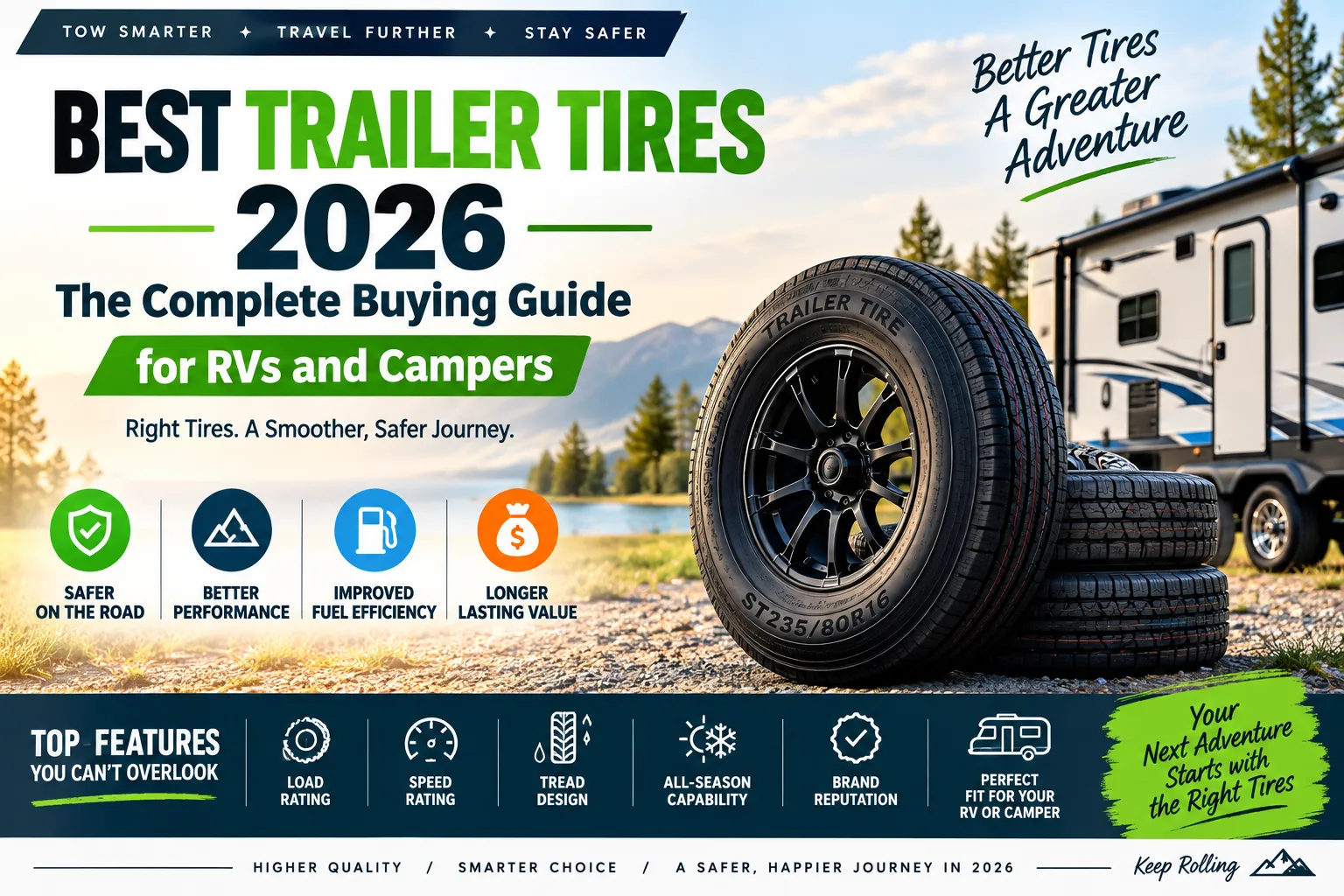
Choosing the best trailer tires in 2026 is no longer just about finding the right size. With the evolution of heavier, more complex RVs and the increased speeds of modern highway travel, your tires are the single most important safety component between your rig and the pavement. Whether you are towing a small utility trailer or a 16,000-pound fifth wheel, the rubber you choose determines your stopping distance, your fuel economy, and, most importantly, your resistance to catastrophic blowouts.
In the current market, we have seen a significant technological leap. Manufacturers are now utilizing advanced vulcanization processes and silica-rich rubber compounds that were previously reserved for high-performance passenger vehicles. These innovations are specifically designed to reduce rolling resistance and dissipate the extreme heat generated during long-haul summer towing. This guide breaks down the top performers for 2026 and explains the technical specifications you must understand before making a purchase.
The Great Debate: ST vs. LT Tires for Trailers
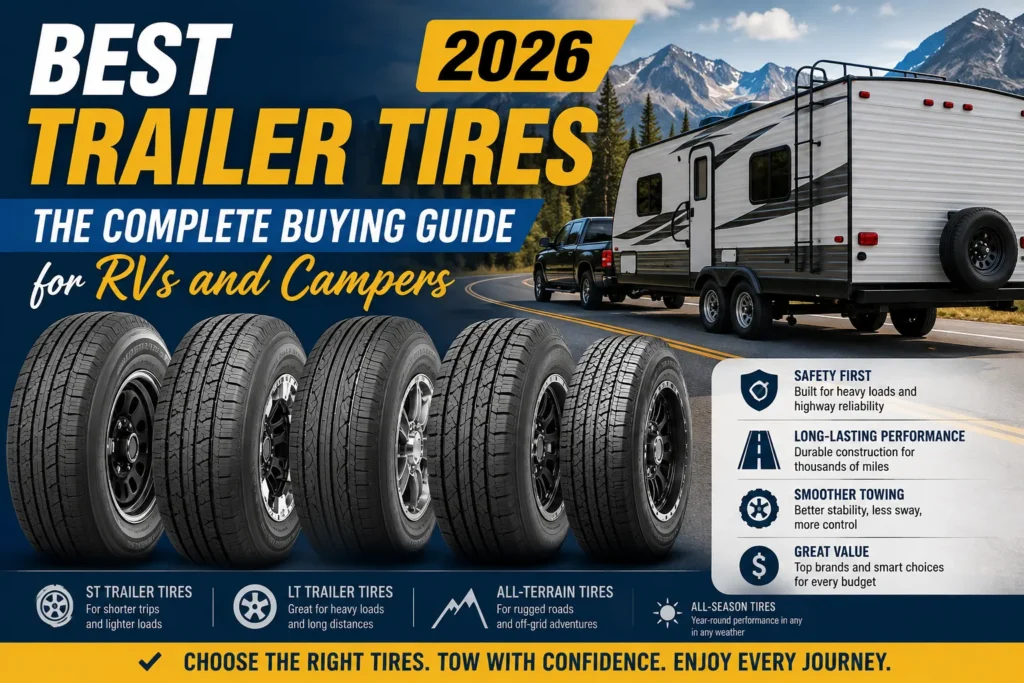
One of the most persistent questions in the RV community is whether to stick with Special Trailer (ST) tires or switch to Light Truck (LT) tires. In 2026, the answer has become clearer due to engineering improvements in the ST category.
Special Trailer (ST) Tires: These are engineered specifically for the demands of a trailer. They feature stiffer sidewalls to reduce trailer sway and are built with chemicals that resist ozone and UV oxidation, which is vital for trailers that spend a lot of time parked at campsites. In 2026, premium ST tires have largely closed the quality gap that once made them prone to failures.
Light Truck (LT) Tires: Some heavy-duty trailer owners prefer LT tires because they are built to more rigorous commercial standards and often feature more robust internal steel belts. However, LT tires do not always have the same stiffness as ST tires, which can lead to increased sway in certain towing configurations. If you choose an LT tire, you must ensure it is rated for the specific weight of your trailer, which often requires a Load Range G or higher.
Decoding Load Ranges and Speed Ratings
To find the best trailer tires for your needs, you must be able to read the sidewall like a pro. The 2026 standards have pushed many manufacturers to increase their speed ratings to accommodate modern traffic flows.
| Tire Rating Element | What It Means | 2026 Standard Recommendation |
|---|---|---|
| Load Range E | 10-ply equivalent for medium loads | Standard for travel trailers up to 10k lbs |
| Load Range G | 14-ply equivalent for heavy loads | Essential for large 5th wheels and toy haulers |
| Speed Rating L | Rated for 75 mph | The old industry minimum; avoid for highway use |
| Speed Rating N | Rated for 87 mph | The new 2026 gold standard for safety |
Operating a tire at its maximum load or maximum speed for extended periods creates immense internal heat. For comprehensive safety, always select a tire with a load capacity that exceeds your trailer’s Gross Vehicle Weight Rating (GVWR) by at least 15 to 20 percent. This creates a “safety cushion” that protects the tire structure during sudden maneuvers or uneven weight distribution.
Top Picks: The Best Trailer Tires for 2026
1. Goodyear Endurance (The All-American Favorite)
The Goodyear Endurance remains the top-selling trailer tire in the United States for good reason. Manufactured in the USA, this tire features a specialized inner liner to reduce air loss and a scuff guard on the sidewall to protect against curb damage. In 2026, the Endurance line has expanded its size offerings to cover almost every travel trailer on the market. It carries an N-speed rating (87 mph), making it one of the most stable tires for interstate travel.
2. Sailun S637 (The Commercial-Grade King)
For owners of heavy fifth wheels and toy haulers, the Sailun S637 is often cited as the “gold standard.” It is a regional all-steel radial that offers commercial-level durability. Its multi-sipes and deep tread depth provide excellent traction and heat dissipation. It is particularly resistant to the side-scrubbing forces that occur on multi-axle trailers during tight turns. If you are worried about preventing blowouts in extreme heat, the S637’s all-steel construction is a massive advantage.
3. Michelin Agilis CrossClimate (The Premium LT Option)
While technically an LT tire, the Agilis CrossClimate has become a favorite for high-end Airstream and luxury trailer owners who want the smoothest possible ride. Its unique tread pattern is designed to handle wet and snowy conditions better than any dedicated ST tire. It is a high-mileage tire that offers superior braking performance, which is a critical safety factor when towing on steep mountain grades.
4. Bridgestone Duravis R238
This is a heavy-duty commercial tire designed for the most demanding environments. If your towing involves gravel roads or construction sites, the Duravis R238’s stone-rejector features and thick casing are nearly indestructible. It is built to be retreadable, which speaks to the quality of the internal carcass.
Technical Trends: Smart Tires and Heat Management
The biggest shift in 2026 is the integration of technology. Many premium trailer tires now come with factory-installed RFID chips and internal mounts for TPMS (Tire Pressure Monitoring System) sensors. This allows the tire to communicate directly with your tow vehicle’s dashboard, providing real-time data on temperature and pressure.
Heat is the silent killer of trailer tires. When a tire is underinflated, the sidewalls flex excessively, generating internal heat that can reach over 200 degrees Fahrenheit. This heat causes the rubber to delaminate from the steel belts. By choosing a tire with high-silica tread compounds—now common in the 2026 lines from major brands—you ensure the rubber remains resilient even when the asphalt temperature exceeds 140 degrees.
Why Tread Depth Isn’t Everything: The 5-Year Rule
Unlike passenger cars, trailer tires rarely “wear out” their tread. Instead, they “age out.” Even the best trailer tires of 2026 are subject to the laws of chemistry. Over time, the oils and antioxidants in the rubber compound evaporate, causing the rubber to become brittle—a process known as dry rot.
Industry experts and safety organizations like the NHTSA recommend replacing trailer tires every five years, regardless of how much tread is left. In hot climates or coastal areas with high UV exposure, that window may shrink to three or four years. Always check the DOT date code on the sidewall before purchasing new tires to ensure you aren’t buying “new” tires that have already been sitting in a warehouse for two years.
Maintenance and Installation Best Practices
Even the best tire will fail if it isn’t installed and maintained correctly. When upgrading your tires in 2026, follow these three non-negotiable rules:
- Upgrade Your Valve Stems: High-pressure tires (80 PSI and above) require high-pressure metal valve stems. Standard rubber stems can fail under the combined stress of high pressure and centrifugal force.
- Balance Every Tire: Many shops claim that trailer tires don’t need balancing. This is a myth. Unbalanced tires create vibrations that can loosen interior cabinets and cause uneven tread wear.
- Use a Torque Wrench: Always torque your lug nuts to the manufacturer’s specification. Over-tightening can stretch the studs, leading to wheel detachment, which is a common but preventable disaster discussed in our trailer maintenance checklist.
Environmental Factors: Nitrogen vs. Compressed Air
In 2026, more dealerships are offering nitrogen inflation for trailer tires. Nitrogen molecules are larger than oxygen molecules, meaning they migrate through the tire’s rubber more slowly, helping to maintain consistent pressure. Furthermore, nitrogen is dry, whereas compressed air often contains moisture that can corrode the wheel from the inside. While not strictly necessary if you check your pressures regularly, nitrogen is a valuable “set it and forget it” upgrade for long-distance travelers.
Conclusion
Investing in the best trailer tires for 2026 is an investment in your family’s safety and your peace of mind. By prioritizing higher load ranges (G or H for heavy rigs) and looking for the new N-speed ratings, you significantly reduce the risk of on-road emergencies. Brands like Goodyear, Sailun, and Michelin continue to lead the way with rubber technology that handles the heat and weight of modern towing better than ever before. Don’t wait for a roadside blowout to realize your tires were the weak link in your setup—inspect your date codes today and upgrade to a tire built for the demands of the 2026 travel season.
Frequently Asked Questions
What is the best speed rating for trailer tires in 2026?
The new gold standard for 2026 is the N-speed rating, which is certified for speeds up to 87 mph. This provides a much safer buffer for modern highway speeds compared to the older L (75 mph) or J (62 mph) ratings.
Should I choose ST or LT tires for my trailer?
For most travel trailers, ST (Special Trailer) tires are best because they have stiffer sidewalls to prevent sway. For very heavy fifth wheels, some owners prefer LT (Light Truck) tires for their commercial-grade construction, provided they meet the weight requirements.
How often should I replace my trailer tires?
Trailer tires should be replaced every 3 to 5 years regardless of tread depth. The rubber compounds degrade due to UV exposure and heat, leading to internal structural failure even if the tire looks new.
Is it necessary to balance trailer tires?
Yes, balancing is highly recommended. It prevents uneven tread wear and reduces the vibrations transferred to the trailer’s chassis and interior components, extending the life of your rig.