As the peak of the 2026 Atlantic hurricane season arrives, the latest advisories from the National Hurricane Center (NHC) serve as a critical reminder for RVers along the Gulf Coast and Eastern Seaboard. Unlike traditional homeowners, recreational vehicle owners face a unique set of challenges when a tropical storm threatens. With lightweight construction, high profiles, and mobile foundations, travel trailers, fifth wheels, and motorhomes are exceptionally vulnerable to extreme weather. To protect your investment and save lives, understanding the exact protocols for RV tropical storm preparation is not optional—it is a survival necessity.
When a tropical storm weather forecast threatens your current campground, your preparation timeline must be measured in hours, not days. The fundamental rule of RV safety is that you should never, under any circumstances, attempt to ride out a tropical storm or hurricane inside your rig. This comprehensive guide outlines the critical steps to secure your RV, formulate a reliable evacuation plan, and minimize storm damage, whether you are towing your trailer to safety or leaving it anchored at a secure site.
The Golden Rule: Secure vs. Evacuate
The very first decision you must make when a tropical storm warning is issued is whether you will evacuate with your RV or secure it and flee in a tow vehicle or passenger car. This decision is dictated primarily by the warning timeline, your towing capacity, and localized evacuation routes. Trying to tow a large travel trailer or drive a Class A motorhome in sustained tropical storm-force winds (39 mph or higher) is incredibly dangerous and can lead to catastrophic rollovers on open highways.
If you are within 48 hours of expected tropical storm-force winds, your primary focus should be personal safety. If evacuation routes are already congested, leaving your trailer behind and evacuating in a smaller, more maneuverable vehicle is often the smartest choice. For general guidance on managing severe weather events on the road, refer to our comprehensive resource on RV severe weather safety.
When to Evacuate with Your RV
- Early Warnings: You have at least 72 hours of lead time before the storm is projected to make landfall. This gives you enough time to secure loose items, pack your cabin, plan an inland route, and complete your tow before high-wind advisories are active.
- Clear Routes: Evacuation roads are open, free of severe traffic bottlenecks, and do not cross low-lying bridges or flood-prone causeways. Heavily congested interstates can leave you stranded with a tow rig in the middle of a major storm.
- Safe Destination: You have a confirmed reservation or safe parking space at an inland RV park or campground well outside the storm’s path, ideally at an elevation that is safe from river flooding.
When to Leave Your RV Behind
- Late Warnings: The storm is less than 36 to 48 hours away, and winds are already beginning to gust. Attempting to hit the road at this point risks getting caught in hazardous crosswinds.
- High Wind Danger: High-profile rigs act like massive sails in heavy winds. Towing in winds above 30 mph is extremely hazardous, even with a premium weight-distribution hitch.
- Severe Storm Surge: If your campground is in a low-lying coastal zone or under a mandatory evacuation order, you must secure the rig quickly and evacuate immediately in a standard passenger vehicle. Rigs can be replaced; lives cannot.
Step-by-Step RV Tropical Storm Preparation
If you have decided that the safest course of action is to leave your RV behind at a secure campsite or storage lot, you must perform several structural and mechanical tasks to minimize the risk of damage. These steps are designed to reduce wind resistance, prevent water intrusion, and anchor the trailer as securely as possible.
1. Retract Slide-outs and Awnings
This is the single most important physical action you can take. RV slide-outs significantly increase the surface area exposed to high-velocity winds. Leaving slides extended during a storm exposes delicate rubber seals, slide toppers, and structural mechanisms to extreme forces. Retracting slide-outs keeps the RV’s shell compact and structurally rigid, reducing the leverage winds can exert on your rig.
Before retracting the slides, climb up on a ladder or use a long broom to clear all debris, branches, and pine needles from the slide-out roofs. If you pull the slides in with debris on top, it can puncture or deform your rubber slide seals, allowing heavy rain to flood the interior during the storm. Once retracted, engage any manual slide locks that came with your travel trailer or motorhome.
Similarly, patio awnings and window slide awnings must be completely retracted and locked. Even minor wind gusts can shred heavy vinyl awnings or rip the mounting brackets directly out of the fiberglass sidewalls, causing thousands of dollars in structural damage. If your awning has a manual lock or travel latch, make sure it is fully engaged.
2. Fill Water Tanks for Ballast
While RVers typically travel with empty or near-empty tanks to maximize fuel efficiency, a parked RV facing tropical storm-force winds needs as much weight as possible to lower its center of gravity. You should fill your fresh water tank to 100% capacity before the storm hits. Every gallon of water adds approximately 8.34 pounds of ballast. For a standard 50-gallon fresh water tank, this adds more than 400 pounds of weight directly over the frame and axles, greatly reducing the risk of a wind-induced rollover.
In addition to filling fresh water, ensure that your stabilizer jacks are fully extended on solid, wide pads. Standard plastic stabilizer pads can sink or crack on muddy ground during heavy rain. Place wide wooden blocks, heavy-duty rubber pads, or concrete pavers underneath the stabilizer jacks to distribute the weight across a larger surface area. This prevents the jacks from sinking and causing the trailer to tilt or slip in high winds.
Conversely, you should empty your black and grey waste tanks. Storing raw sewage in your tanks during a storm is a major environmental and contamination hazard if the RV is damaged, tipped, or flooded. Ensure your waste valves are closed and locked to prevent backflow from external campground sewer connections.
3. Tire and Axle Chocking
Wind forces can rock a travel trailer back and forth, putting extreme stress on your tires, suspension, and leveling jacks. To stabilize the trailer, use heavy-duty rubber wheel chocks on both sides of the axles. Place them tightly against the front and back of the tires. Avoid using cheap, lightweight plastic chocks, as they can crack, slide, or deform under the shifting loads of a major storm. If you have tandem axles, consider using x-chocks between the tires to lock them in place and prevent any rotational movement.
4. Secure Exterior Gear and Propane Tanks
Tropical storms turn everyday items into lethal projectiles. Take a walk around your campsite and remove everything that is not permanently attached to the ground or the trailer. This includes camp chairs, outdoor kitchens, portable generators, solar panels, bikes, and leveling blocks. Store these items inside the RV or in your tow vehicle’s locked bed.
Pay close attention to your LP (liquid propane) tanks. Turn off the main gas valves on all cylinders to prevent gas leaks in the event of a line rupture. If your tanks are removable (such as standard 20 lb or 30 lb cylinders on travel trailers), ensure they are tightly strapped down or locked inside their heavy-duty storage compartments. Unsecured propane tanks are a severe hazard in high-wind and flooding conditions. If your propane cover is loose, secure it with heavy-duty bungee cords or ratchet straps so it does not blow away.
5. Disconnect Utilities
Do not leave your RV connected to park utilities during a major storm. Power grids are highly susceptible to voltage spikes, brownouts, and physical line damage during tropical systems. Disconnect your 30-amp or 50-amp power cord from the campground pedestal and store it. Leave your surge protector disconnected as well; even the best surge protectors cannot stop a direct lightning strike or a severe utility-pole collapse from frying your RV’s delicate 12V and 120V systems.
Shut off the campground water faucet and disconnect your fresh water hose. High winds can snap hoses, causing localized flooding and water pressure loss. Ensure all utility bay doors are closed, latched, and locked to prevent water driven by high winds from bypassing the rubber weather seals.
Managing Water Hazards and Coastal Flooding
Wind is only half the battle during a tropical storm; flooding and storm surges pose an equally devastating threat to campgrounds. Coastal RV resorts and lakeside parks are often located in low-lying areas that are the first to submerge under heavy rainfall. Understanding your local geography and monitoring river stages and tidal predictions via the National Weather Service (NWS) is vital.
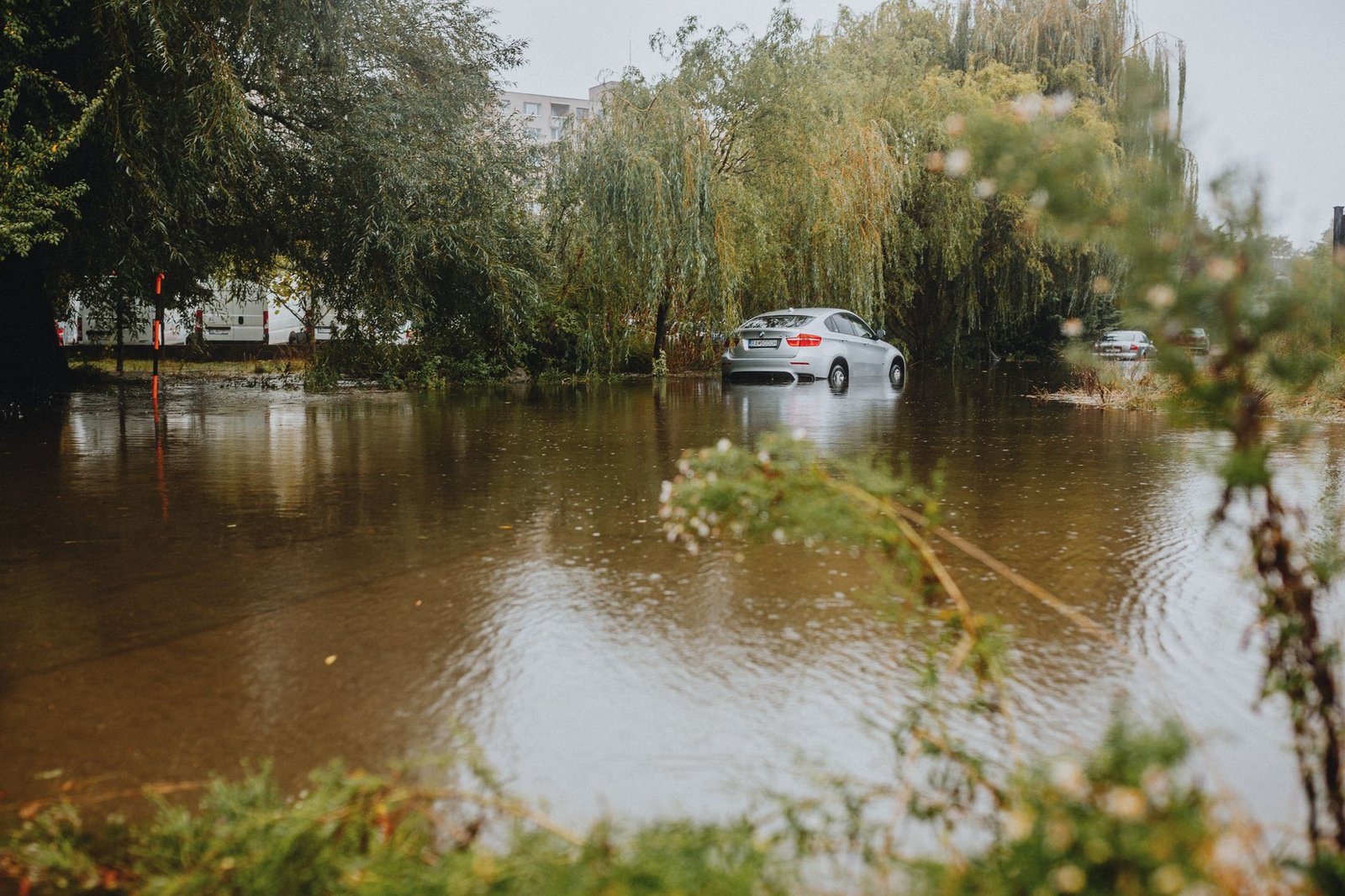
If your campsite is situated near a river, bay, or coastal inlet, you must keep a close eye on rising water levels. In the event of localized flooding, having a clear understanding of rv flash flood safety can help you make split-second survival decisions. Remember that a travel trailer can float in as little as 12 inches of moving water, quickly losing traction and washing away.
Tidal Surges and Campground Topography
When selecting or staying at a campsite during hurricane season, research the camp’s elevation. Many coastal parks are located just feet above sea level. Even a minor tropical storm can produce a 2- to 4-foot storm surge that will quickly inundate campsites. Do not rely on campground staff to alert you of a rising surge; they may be busy securing park facilities. Monitor NOAA weather radios and localized radar maps to track flood risks dynamically.
The Risk of Saltwater Contamination
Saltwater flooding is incredibly destructive to RVs. Unlike freshwater, saltwater is highly conductive and corrosive. If saltwater reaches your RV’s undercarriage, it can ruin electric brake assemblies, corrode wiring harnesses, and cause rapid rusting of the steel frame. If your RV’s chassis or wheels are exposed to brackish or salty storm surge, they must be thoroughly sprayed down with fresh water from a pressure washer or hose as soon as it is safe to do so. This helps rinse away salt crystals before they can bond with the metal surfaces.
RV Preparedness Checklist: Secure Site vs. Evacuation Mode
To help you prepare your rig efficiently under pressure, use this checklist to coordinate your tasks based on whether you are securing the RV in place or executing an active towing evacuation.
| System/Area | Securing in Place (Leaving Rig Behind) | Evacuation Mode (Towing/Driving Out) |
|---|---|---|
| Slide-outs | Fully retracted and locked shut. Check roof for debris. | Fully retracted and locked shut. Travel bars engaged. |
| Awnings | Retracted, locked, and strapped if possible. | Retracted, locked, and travel latches engaged. |
| Fresh Water Tank | Filled to 100% capacity for heavy ballast. | Filled to 10–20% capacity (only what is needed for travel). |
| Grey & Black Tanks | Emptied, thoroughly flushed, and valves locked shut. | Emptied completely to minimize towing weight. |
| Propane Tanks | Valves shut off; tanks securely chained or strapped. | Valves shut off at the tank before hitches are connected. |
| Power & Utilities | Unplugged, power cord stored, pedestal breaker off. | Unplugged, hoses and cords organized in wet bays. |
| Stabilizer Jacks | Extended fully; consider adding heavy-duty blocks. | Fully retracted and pinned for travel. |
| Site Loose Gear | Packed inside the RV cabin or locked in tow vehicle. | Packed securely inside storage bays or tow vehicle. |
Emergency Towing Tactics During Storm Evacuations
If you are fortunate enough to have a wide safety window and choose to tow your rig out of the storm zone, you must exercise extreme caution. High winds and heavy rain are common hours before the center of a tropical storm makes landfall. Safe driving requires specialized towing adjustments to handle the crosswinds and sudden gusts that occur on open interstates.
When evacuating, reduce your speed to at least 10–15 mph below the posted speed limit. High winds can cause severe trailer sway, making it incredibly difficult to maintain lane control. If you experience sway, resist the urge to slam on your tow vehicle’s brakes; instead, manually apply the trailer brakes using your integrated brake controller while keeping your steering wheel straight. For those facing rapid-evacuation scenarios, studying a structured rv wildfire evacuation plan checklist can provide transferable, high-stress towing skills that save lives during weather emergencies.
Wind Direction and Towing Dynamics
Understanding wind dynamics is crucial for safe towing. Headwinds will drastically reduce your fuel economy, but crosswinds are the real danger. A strong gust hitting the flat, broad side of your travel trailer can push the entire rig sideways, causing you to drift out of your lane. If you encounter crosswinds greater than 25 mph, look for a safe truck stop or rest area to park and wait out the worst of the weather. Never attempt to “power through” high winds with a travel trailer.
Pre-Trip Hitch and Tire Inspection
Before pulling out of your campsite, perform a rapid safety inspection of your towing equipment:
- Hitch Integrity: Ensure your weight distribution hitch and sway bar are properly tensioned. Do not skip the sway bar, as it is your primary defense against sudden tropical crosswinds. Check that all cotter pins, safety chains, and receiver pins are secure.
- Tire Pressure: Verify that both tow vehicle and trailer tires are inflated to their maximum cold pressure rating. Under-inflated tires are highly prone to blowouts when subjected to lateral wind loads. Check your spare tire’s pressure as well.
- Emergency Brake Cable: Double-check that your breakaway switch cable is securely attached to the tow vehicle’s frame, not the hitch receiver itself. If your trailer detaches, this cable will activate the trailer brakes automatically to stop it.
Developing Your Personal Disaster Kit for RVing
According to disaster relief recommendations on Ready.gov, every household must have an emergency kit prepared to sustain life for at least 72 hours. For RVers, this kit should be divided into two categories: personal survival gear and RV maintenance recovery tools. Keep these items in a heavy-duty, waterproof tote that is easily accessible in your tow vehicle or motorhome cabin.
Personal Survival Essentials
- Water and Food: At least one gallon of water per person per day, along with non-perishable canned goods, energy bars, and a manual can opener. Keep a portable water filter or purification tablets on hand.
- Medical Supplies: A comprehensive first-aid kit, a minimum of a two-week supply of all prescription medications, and copies of important medical records.
- Power & Light: Waterproof flashlights, headlamps, extra batteries, and portable USB power banks for charging mobile devices and emergency weather radios. A crank-powered NOAA weather radio is a valuable addition.
- Important Documents: Keep your RV registration, title, insurance policies, and personal identification in a waterproof dry bag. Take photos of your RV’s interior and exterior before evacuating to streamline future insurance claims.
RV Recovery and Emergency Tools
- Tarp and Rope: Heavy-duty plastic tarps, bungee cords, and paracord to seal broken vents or roof leaks immediately after a storm.
- Basic Hand Tools: A socket set, screwdrivers, pliers, and a utility knife for quick repairs or manual slide-out retraction.
- Tire Repair Gear: A high-capacity 12V air compressor, tire plug kit, and a properly inflated spare tire.
- Duct Tape and Sealant: A roll of heavy-duty Gorilla tape and a tube of self-leveling lap sealant for fast waterproofing.
Post-Storm Re-entry and Rig Assessment
Once the tropical storm passes and local officials declare it safe to return to the area, approach your parked RV with extreme caution. Natural disasters leave behind invisible hazards that can cause severe injury or property damage if ignored. Before hooking up your battery or turning on any appliances, perform a meticulous structural and electrical inspection.
Look Out for Overhead Hazards
As you walk up to your RV, look up. Check for hanging tree limbs, broken utility poles, and sagging electrical lines touching or near your rig. If a power line is touching your RV, do not touch any part of the vehicle. Contact local utility authorities immediately and keep your distance.
Check for Structural Damage and Water Leaks
Examine the exterior walls, roof vents, and windows for impact damage from flying debris. Look closely at the seals around your slide-outs. If water has penetrated the interior, document the damage immediately with photographs before attempting cleanup. Use a moisture meter if you have one to check for hidden water pocketing behind wall panels. Standing water on the roof should be cleared to prevent pooling over weak spots.
Safely Reconnect Electrical Systems
Do not simply plug your RV back into the campground pedestal. Check the pedestal for signs of water ingress, mud, or physical damage. If the pedestal appears safe, turn on the main breaker and use an electrical line tester or EMS (Electrical Management System) to verify that the shore power is supplying correct voltage and is properly wired. Only after verifying the power source should you reconnect your RV’s shore power cord.
By executing these structured preparation and recovery protocols, you can navigate the volatile nature of the 2026 hurricane season with confidence, ensuring both your personal safety and the long-term preservation of your home on wheels.
Frequently Asked Questions
Should I stay in my RV during a tropical storm?
No. You should never shelter in an RV, travel trailer, or motorhome during a tropical storm or hurricane. RVs lack the structural framing and anchoring required to withstand high-velocity winds, flying debris, and storm surges. Always evacuate to a permanent, stick-built structure.
Should I fill my RV water tanks before a tropical storm hits?
Yes. If you must leave your RV parked at a secure campsite, filling your fresh water tank completely adds hundreds of pounds of low-profile ballast, which lowers the vehicle’s center of gravity and helps prevent it from tipping over in high winds.
Should I leave my RV slide-outs in or out during high winds?
Always pull your RV slide-outs in during high winds or tropical storm conditions. Retracting the slides reduces the surface area exposed to wind forces, protects the slide toppers from tearing, and strengthens the overall structural integrity of the rig’s shell.