The 2026 Reality of Southwest RV Travel
As the 2026 monsoon season reaches its peak, RVers across the American Southwest are facing a familiar but intensifying threat: the haboob. These massive walls of dust, often standing thousands of feet tall and stretching for miles, are not just a visibility hazard. For owners of travel trailers, fifth wheels, and motorhomes, a haboob is a localized environmental disaster that can sandblast paint, clog expensive HVAC systems, and compromise engine integrity in a matter of seconds.
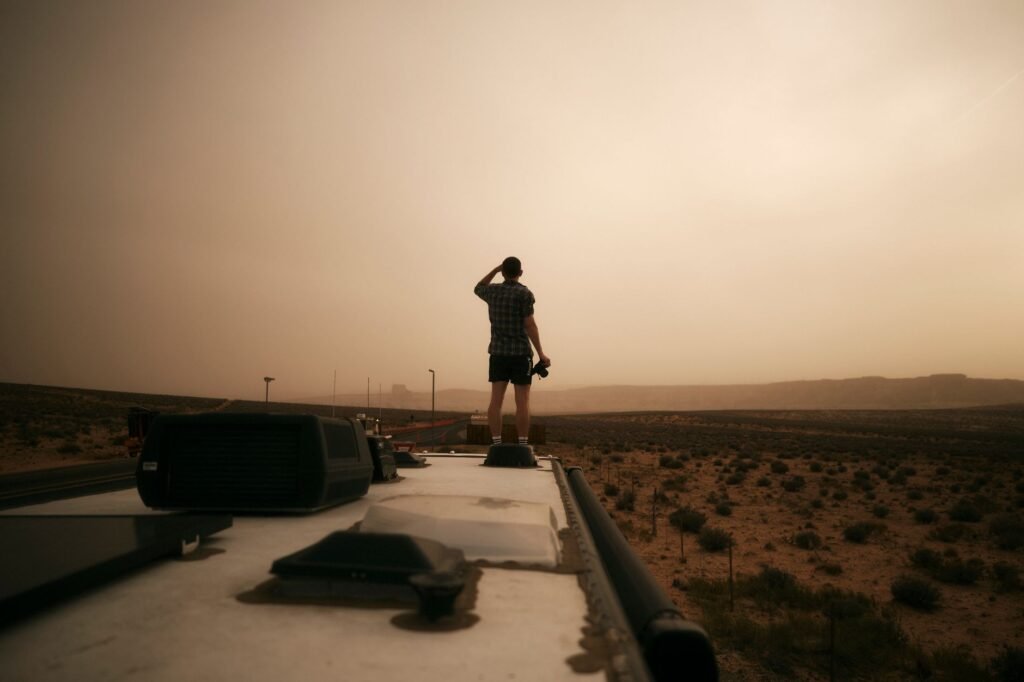
Unlike a standard thunderstorm, a haboob carries a dense concentration of abrasive particulates. When these particles meet the delicate seals of an RV slide-out or the intake of a modern diesel pusher, the results are often catastrophic. This RV Haboob Survival Guide provides the critical protocols you need to protect your investment and your safety during the 2026 storm season.
Immediate Action: Pull Aside, Stay Alive
The most dangerous place to be during a dust storm is behind the wheel. For those towing a trailer, the danger is doubled. High-profile trailers act as sails in the 50 to 70 mph outflow winds that precede the dust wall. If you see a wall of brown clouds approaching while on the road, you must act before visibility drops to zero.
- Check Your Surroundings: Do not wait for the dust to hit. As soon as you see the storm on the horizon, look for a safe exit or a wide shoulder.
- Execute the Pull-Over: Pull as far off the pavement as possible. In a trailer, this is critical to avoid being clipped by other drivers who may lose the road line.
- Kill All Lights: This is the most misunderstood safety step. Once parked, turn off all vehicle lights, including emergency flashers. If your lights are on, trailing drivers may follow them, thinking you are still on the road, leading to a high-speed rear-end collision.
- Set the Parking Brake: Keep your foot off the brake pedal so your brake lights do not illuminate.
- Wait it Out: Haboobs usually pass within 15 to 45 minutes. Stay inside your vehicle with your seatbelt fastened until visibility is completely restored.
Protecting the Exterior: Seals and Slide-outs
Dust storm particulates are microscopic and jagged. They act like high-grit sandpaper when trapped between moving parts. If you are at a campsite when a storm alert is issued, your first priority is the exterior of your rig. Dust can penetrate even the tightest seals if the wind pressure is high enough.
Retract all slide-outs immediately. Slide-out toppers (the small awnings above the slides) are particularly vulnerable to being ripped off by the straight-line winds associated with haboobs. Furthermore, leaving slides extended allows dust to accumulate on the top of the slide box; when you eventually retract it, that dust is dragged directly into your interior seals, causing tears and future leaks. For more on maintaining these critical components, see our RV Roof Maintenance and Repair Guide.
Mechanical and HVAC Safeguards
The mechanical systems of your RV are the most expensive to repair after a dust event. The Sonoran Desert dust is rich in minerals that, when sucked into an engine, can cause premature wear on cylinders and turbochargers. Similarly, RV air conditioners are not designed to filter out the volume of dust found in a haboob.
If you are running your generator or engine when the storm hits, shut them down immediately. The intake of a generator can become clogged in minutes, leading to overheating or permanent engine failure. For your rooftop AC units, turn them off and close the internal dampers. High-speed dust can bypass standard foam filters, coating the evaporator coils in a layer of mud if the dust mixes with the condensation on the coils. This creates a concrete-like substance that is nearly impossible to clean without professional disassembly. You may want to consider an RV Air Filtration Upgrade to better handle the lingering micro-particulates after the main storm has passed.
RV Haboob Readiness Checklist
| System | Pre-Storm Action | Post-Storm Maintenance |
|---|---|---|
| Slide-outs | Full retraction; check bulb seals. | Wipe down exterior walls before extending. |
| Awnings | Stow and lock in place. | Inspect arms for bending or debris. |
| HVAC | Power off; close all vents. | Replace all return air filters immediately. |
| Engine/Gen | Shut down to prevent dust intake. | Check air filter restriction gauge. |
| Solar Panels | N/A (Ensure mounting is secure). | Rinse with low-pressure water only. |
Post-Storm Cleanup: The Proper Way to De-Dust
Once the sky clears, the instinct is to grab a rag and start wiping. This is a mistake. The dust left behind by a haboob is highly abrasive. Wiping it with a cloth—even a microfiber one—will result in thousands of swirl marks in your gel coat or paint. This is essentially “dry sanding” your RV.
The only safe way to clean your rig is a high-volume, low-pressure rinse. Start at the roof and work your way down, using plenty of water to float the dirt off the surface. Pay special attention to the window tracks and the seals around your storage bays. If dust sits in these tracks, it will act as a grinding paste every time you open a window, eventually destroying the felt and rubber tracks that keep your RV watertight.
Special Care for Solar and Sensors
Modern 2026 RVs are equipped with a suite of sensors, from blind-spot monitoring to high-efficiency solar arrays. Haboob dust can significantly degrade the performance of these systems. A layer of dust on a solar panel can drop its output by as much as 40%. When cleaning solar panels, ensure they are cool to the touch before applying water to prevent thermal shock to the glass. For the sensors used in modern towing safety, use a dedicated lens cleaner and a clean cloth only after the bulk of the grit has been washed away. If your rig uses the latest stability tech, refer to our guide on Trailer Sway Control Standards to ensure your sensors are calibrated correctly after a storm.
The Health Factor: Valley Fever and PM2.5
Survival isn’t just about the trailer; it’s about the occupants. Southwest dust storms frequently carry Coccidioides spores, which cause Valley Fever. These spores can remain in the air for hours after the visible dust has settled. In 2026, air quality monitoring has become a standard feature for many RVers. If your rig does not have a built-in HEPA filtration system, it is advisable to wear an N95 mask during the initial post-storm cleanup. According to the National Weather Service, the particulate matter (PM2.5) during these events reaches levels that are hazardous to all individuals, not just those with respiratory issues.
Conclusion: Respect the Desert
A haboob is a reminder of the raw power of the Southwest environment. By following this RV Haboob Survival Guide, you can ensure that your 2026 travels remain safe and your trailer remains in showroom condition. The key is early detection and immediate, disciplined action. Monitor local weather via the Arizona Department of Transportation alerts, and never try to “outrun” the dust. When the desert speaks, the best move is to listen, pull over, and wait for the air to clear.
Frequently Asked Questions
Should I keep my emergency flashers on during a haboob?
No. If you have pulled safely off the road, turn off all lights. Keeping lights on can trick other drivers into following you, leading them to drive off the road or crash into the back of your parked RV.
Can I run my RV air conditioner during a dust storm?
It is highly discouraged. Dust can clog the evaporator coils and internal filters, mixing with condensation to create a thick mud that ruins cooling efficiency and requires professional cleaning.
How do I safely clean dust off my solar panels?
Use high volumes of low-pressure water to rinse the panels. Never wipe them while dry, as the abrasive desert sand will scratch the glass, permanently reducing the panels’ efficiency.
What is the biggest mechanical risk to an RV in a haboob?
The primary risk is dust ingestion into the engine or generator air intake. This can cause immediate clogging or long-term internal engine wear due to the abrasive nature of the silt.