
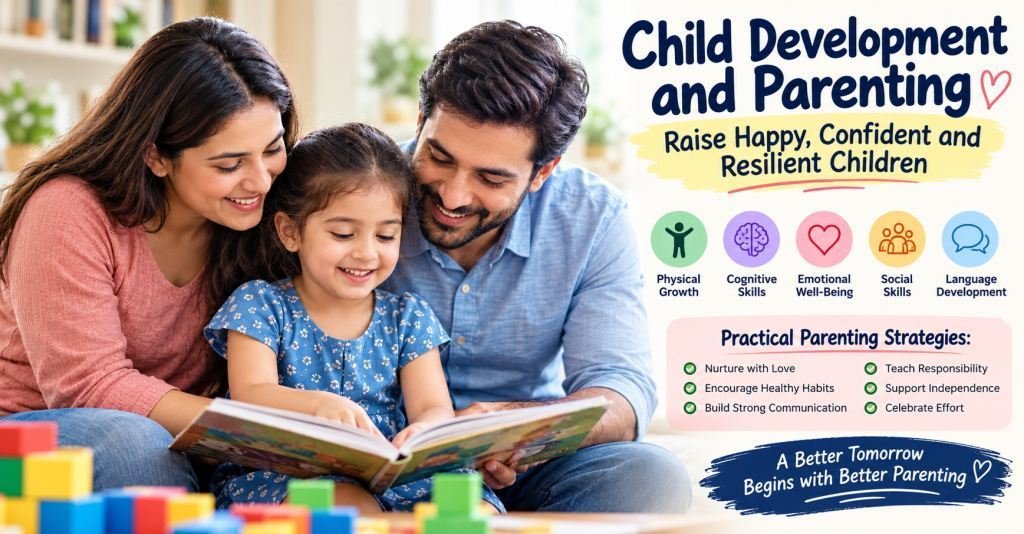
Parenting is one of life’s most rewarding journeys, yet it also comes with countless questions and challenges. Understanding child development and parenting together helps parents make informed decisions that support their child’s emotional, physical, social, and cognitive growth. Every stage of development brings new milestones, learning opportunities, and responsibilities. By creating a nurturing environment, encouraging independence, and maintaining healthy communication, parents can build a strong foundation that prepares children for lifelong success.
What Is Child Development?
Child development refers to the physical, emotional, cognitive, language, and social changes children experience from birth through adolescence. Development happens gradually, although every child grows at their own pace.
The five major areas of child development include:
- Physical development
- Cognitive development
- Language development
- Emotional development
- Social development
Each area influences the others. For example, strong emotional health helps children perform better academically, while good physical health supports learning and concentration.
Why Parenting Matters in Child Development
Parents are a child’s first teachers.
From the moment a baby is born, parents shape their children’s beliefs, behaviors, habits, and emotional security. Positive parenting doesn’t mean being perfect—it means consistently providing love, guidance, and support.
Children who receive positive parenting often develop:
- Better emotional regulation
- Higher self-confidence
- Strong communication skills
- Better academic performance
- Healthier relationships
- Greater resilience during challenges
Major Stages of Child Development
| Age | Development Focus | Parenting Priority |
|---|---|---|
| Birth–2 Years | Attachment, sensory learning, motor skills | Love, security, responsive care |
| 2–5 Years | Language, imagination, independence | Encourage exploration and play |
| 6–12 Years | Learning, friendships, responsibility | Build confidence and routines |
| 13–18 Years | Identity, emotions, independence | Communication and guidance |
Understanding these stages helps parents set realistic expectations instead of comparing children with others.
Physical Development: Building Healthy Bodies
Physical development includes growth in height, weight, muscle coordination, and movement skills.
Parents can encourage healthy development by:
- Providing balanced nutrition
- Limiting processed foods
- Encouraging outdoor play
- Promoting regular exercise
- Ensuring sufficient sleep
- Scheduling routine medical checkups
Activities like running, cycling, swimming, climbing, and dancing improve coordination while keeping children active and healthy.
Cognitive Development: Growing Curious Minds
Cognitive development involves thinking, memory, reasoning, creativity, and problem-solving.
Simple ways to encourage learning include:
- Reading together every day
- Asking open-ended questions
- Solving puzzles
- Playing educational games
- Visiting museums and libraries
- Encouraging curiosity instead of memorization
Instead of giving immediate answers, ask children questions that help them think independently.
For example:
“What do you think will happen if we plant this seed?”
This approach strengthens critical thinking.
Emotional Development: Helping Children Understand Feelings
Emotional intelligence is one of the strongest predictors of future success.
Children need to learn:
- How to identify emotions
- How to express feelings respectfully
- How to manage disappointment
- How to solve conflicts peacefully
Parents can support emotional development by:
- Listening without judgment
- Validating emotions
- Staying calm during conflicts
- Modeling healthy emotional behavior
- Praising effort rather than perfection
Children learn emotional regulation by watching adults.
Social Development: Learning to Connect with Others
Social skills begin at home before expanding into school and the community.
Healthy social development includes:
- Sharing
- Teamwork
- Respect
- Empathy
- Communication
- Conflict resolution
Parents should encourage:
- Family conversations
- Group activities
- Sports
- Community events
- Cooperative games
Children who develop strong social skills often build healthier friendships and experience fewer behavioral problems.
Positive Parenting Techniques That Really Work
Modern parenting focuses on guidance rather than punishment.
Here are effective strategies:
1. Set Clear Expectations
Children feel safer when rules are consistent.
2. Praise Positive Behavior
Recognize effort instead of only achievements.
Example:
“I noticed how kindly you shared your toys today.”
3. Be Consistent
Changing rules frequently confuses children.
4. Spend Quality Time
Even 20 minutes of focused attention each day strengthens family relationships.
5. Encourage Independence
Allow children to make age-appropriate decisions.
Small responsibilities build confidence.
Common Parenting Challenges
Every parent encounters obstacles.
Some common challenges include:
| Challenge | Helpful Solution |
|---|---|
| Tantrums | Stay calm and acknowledge emotions |
| Screen addiction | Create healthy screen-time limits |
| Homework struggles | Build consistent study routines |
| Sibling conflicts | Teach respectful communication |
| Anxiety | Listen patiently and provide reassurance |
| Poor eating habits | Offer healthy choices without pressure |
Remember that behavior often communicates unmet emotional needs.
The Importance of Play in Child Development
Play is far more than entertainment.
Through play, children develop:
- Creativity
- Language
- Motor skills
- Problem-solving
- Confidence
- Social interaction
Different types of play support different skills.
Examples include:
- Building blocks
- Pretend play
- Outdoor games
- Arts and crafts
- Music
- Board games
- Sports
Parents should allow unstructured play in addition to organized activities.
Healthy Communication Between Parents and Children
Communication builds trust.
Simple habits make a big difference:
- Maintain eye contact
- Listen fully before responding
- Avoid interrupting
- Ask meaningful questions
- Encourage honest conversations
- Avoid harsh criticism
Instead of asking:
“Did you have a good day?”
Try asking:
“What made you smile today?”
Open-ended questions encourage richer conversations.
Balancing Discipline with Love
Discipline means teaching—not punishing.
Effective discipline focuses on learning.
Good discipline includes:
- Logical consequences
- Calm explanations
- Clear boundaries
- Respectful communication
- Consistency
Avoid:
- Yelling
- Public embarrassment
- Physical punishment
- Comparing children with others
Children respond better when discipline is paired with warmth and understanding.
The Role of Technology in Modern Parenting
Technology can support learning when used wisely.
Benefits include:
- Educational apps
- Virtual learning
- Interactive reading
- Skill development
However, excessive screen time may affect:
- Sleep
- Attention span
- Physical activity
- Social interaction
Parents should:
- Create screen-free family time
- Keep devices out of bedrooms
- Monitor online safety
- Encourage offline hobbies
Balance is the key.
Nutrition and Sleep: Foundations for Healthy Development
Good nutrition fuels both body and brain.
Children should regularly consume:
- Fruits
- Vegetables
- Whole grains
- Lean protein
- Dairy or suitable alternatives
- Healthy fats
Adequate sleep supports:
- Memory
- Learning
- Growth
- Mood
- Immunity
Consistent bedtime routines improve sleep quality and overall well-being.
Building Confidence in Children
Confidence develops through experience rather than constant praise.
Parents can build confidence by:
- Allowing children to solve problems
- Celebrating effort
- Encouraging new experiences
- Teaching resilience after failure
- Supporting individual interests
- Avoiding unrealistic expectations
Mistakes should be viewed as opportunities to learn.
When Should Parents Seek Professional Help?
Every child develops differently.
However, professional guidance may be helpful if a child consistently experiences:
- Significant speech delays
- Difficulty interacting with others
- Persistent emotional distress
- Major behavioral concerns
- Ongoing developmental delays
- Noticeable learning difficulties
Early support often leads to better long-term outcomes.
Frequently Asked Questions
What is the relationship between child development and parenting?
Parenting directly influences a child’s emotional, cognitive, social, and physical development through daily interactions, guidance, and support.
Why is positive parenting important?
Positive parenting promotes confidence, emotional security, resilience, and healthy relationships while reducing behavioral problems.
What age is most important for child development?
Every stage is important, but the first five years are especially significant because the brain develops rapidly during early childhood.
How can parents support emotional development?
Parents can listen actively, validate feelings, model healthy emotional behavior, and create a safe environment where children feel understood.
Can too much screen time affect child development?
Yes. Excessive screen time may interfere with sleep, physical activity, attention, and social interaction. Healthy limits and quality content are recommended.
Final Thoughts
Understanding child development and parenting empowers families to make thoughtful choices that shape a child’s future. While no parenting approach is perfect, consistent love, patience, guidance, and encouragement have a lasting impact. By recognizing developmental milestones, encouraging curiosity, supporting emotional well-being, and maintaining open communication, parents help children grow into capable, compassionate, and confident adults.
Ultimately, successful parenting is not about raising perfect children—it’s about raising children who feel secure, valued, and prepared to navigate life’s challenges with resilience and kindness.